
Bone Infection (Osteomyelitis) Treatment in Patna
Chronic bone infection, pus discharge or an infected implant needs more than antibiotics. We clear the infection and rebuild the bone using the Ilizarov method.
On this page
What is bone infection?Warning signsWho may need surgery?How is it treated?Why the Ilizarov method?What to expectRisks and limitationsOur patientsTreatment in Patna & HajipurFAQWhat is bone infection?
Osteomyelitis is infection of the bone. It may follow an open fracture, surgery with plates or nails, or spread through the blood (more common in children). When it becomes chronic, part of the bone dies (sequestrum) and infection keeps returning, often with a discharging sinus.
Warning signs
- Pus or discharge from a wound or small opening near a bone
- Pain, swelling and redness that keep returning
- Fever, especially after a fracture operation
- An implant that is visible or loose
- A fracture that is not healing (infected non-union)
Who may need surgery?
- Chronic osteomyelitis with a sinus or dead bone
- Infected plates or nails after fracture surgery
- Infected non-union (fracture not healed with infection)
- Bone loss after removal of infected bone
- Childhood bone infection causing deformity or shortening
How is it treated?
- Assessment – X-rays, MRI or CT, blood tests, and cultures to identify the germ.
- Debridement – removal of all dead and infected bone and tissue, and of infected implants.
- Antibiotics – based on culture results, often local antibiotic beads or cement as well.
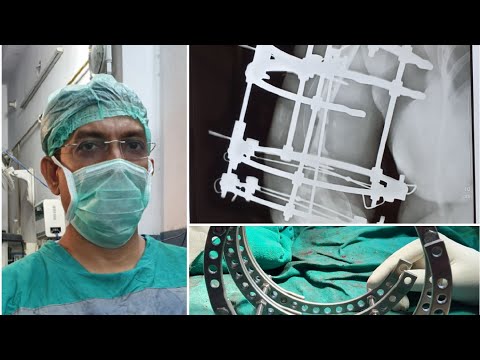
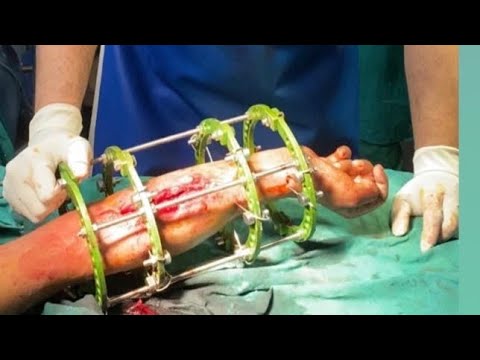
- Stability with the Ilizarov frame – holds the bone without leaving metal inside the infected area.
- Reconstruction – if a gap is left, it is filled by bone transport (see /ilizarov/bone-transport); deformity and shortening are corrected in the same frame.
Why the Ilizarov method?
- No large implant left inside infected bone
- Infection clearance and reconstruction can be combined
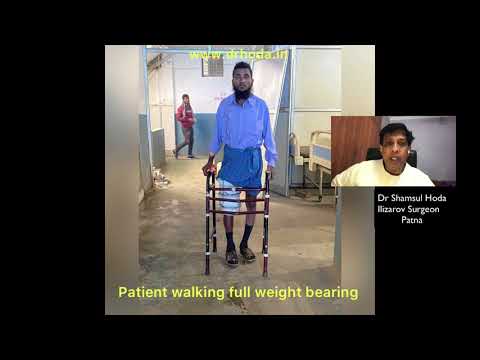
- Allows weight-bearing and walking during treatment
- Can save limbs where amputation has been advised
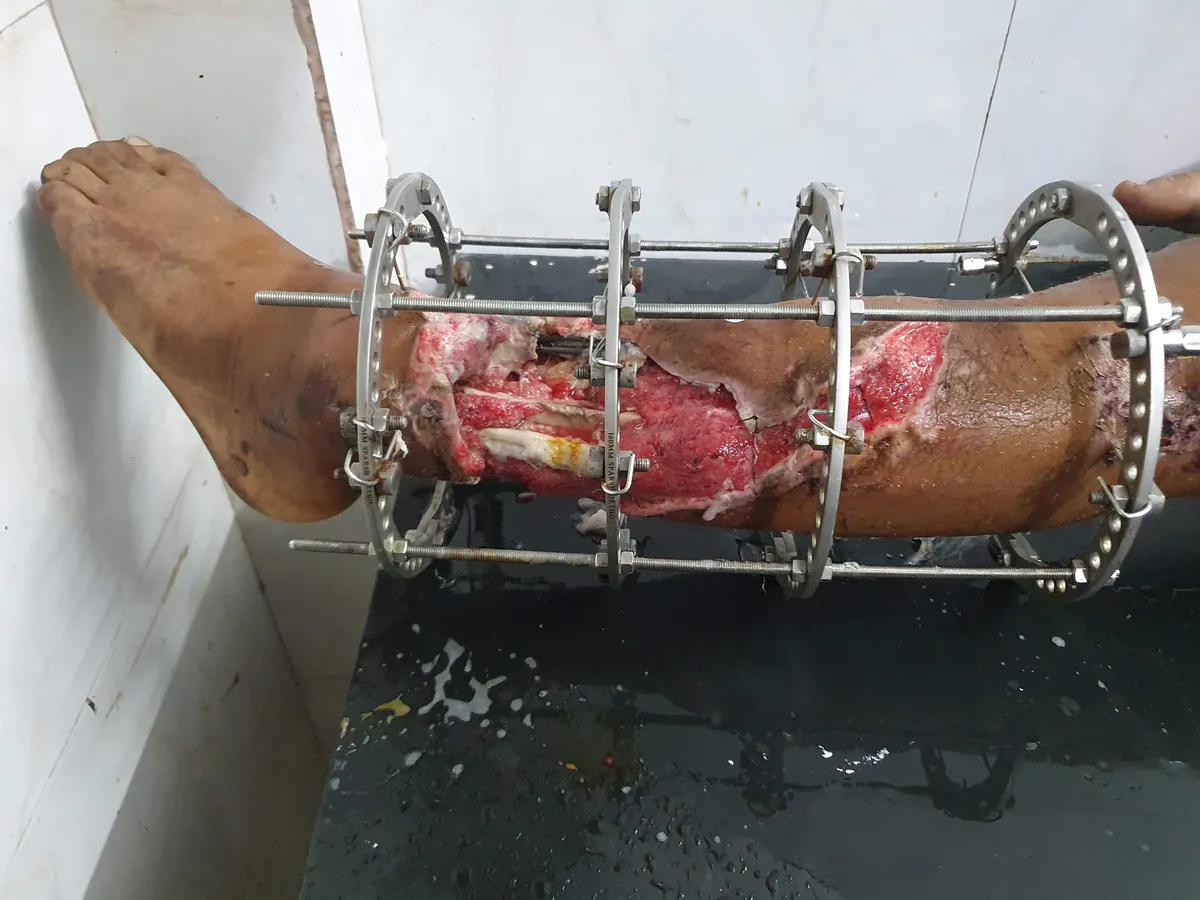
What to expect
Treatment is staged and may take several months. Antibiotics, pin-site care, nutrition and stopping smoking are important. Regular follow-up and blood tests check that infection is controlled.
Risks and limitations
Infection can recur, sometimes years later. Further surgery may be needed. Pin-site infection, stiffness and delayed healing can occur. Dr. Hoda will explain your risks before treatment.
Our patients
Dr. Hoda’s own patients, shared with consent for education; faces and names are hidden. Results vary from patient to patient. Contains clinical and operative images.
Chronic bone infection cleared and the bone saved.
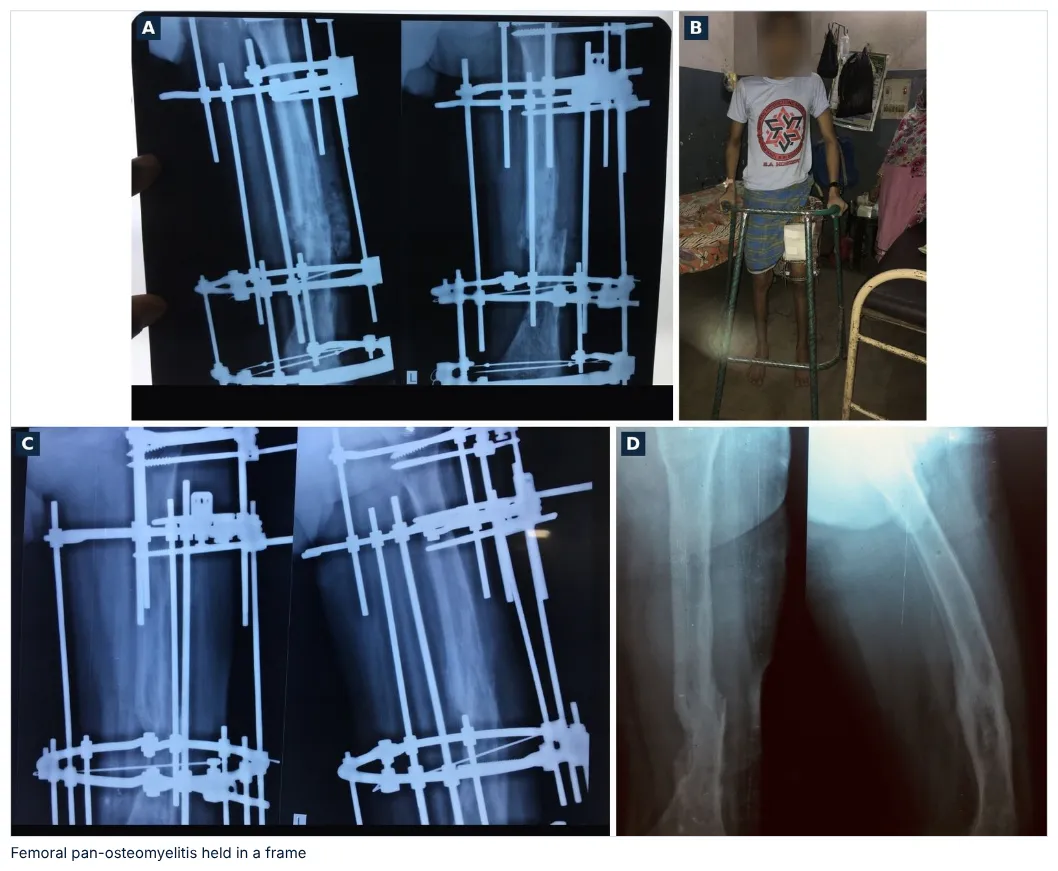
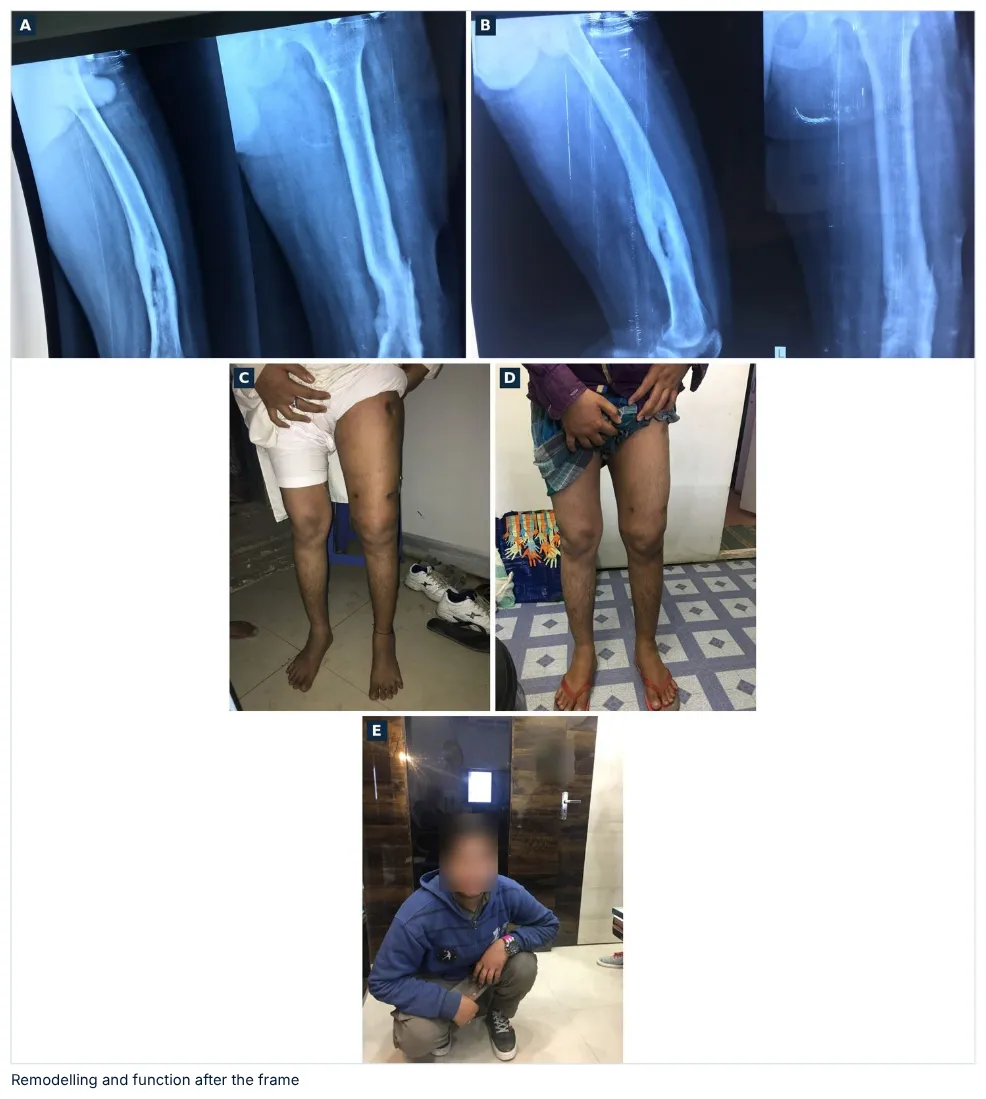
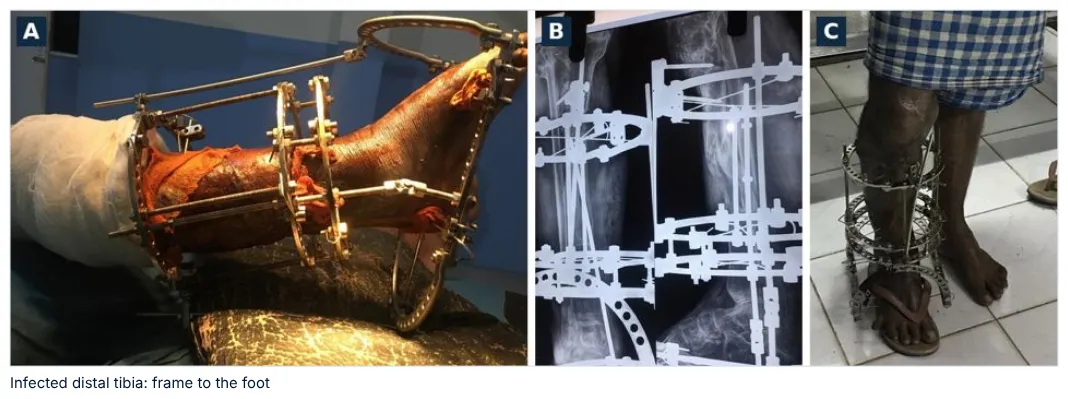
From the free textbook Ilizarov Principles & Limb Reconstruction – Chapter 159 · Chapter 83 · Chapter 84 · More in Clinical Cases.
Treatment in Patna & Hajipur
Consultations at Ortho World Patna (Kankarbagh) and Hajipur. Send photos of the wound, X-rays and culture reports on WhatsApp (77658 67111) for an initial opinion.
Watch
 ▶
 ▶
 ▶
 ▶
 ▶
 ▶
 ▶
When to call us immediately
Redness, pus or bad smell around a wound or pin · fever · increasing pain, numbness or tingling · a loose or broken wire, pin or ring · cold, pale or blue toes or fingers.
Patna +91 77658 67111 · Hajipur 24-hour emergency +91 70704 61111
Frequently asked questions
Can antibiotics alone cure chronic bone infection?
Will my infected plate or nail be removed?
How long will I need antibiotics?
I have been advised amputation. Can my leg be saved?
Is treatment covered by insurance?
A note from Dr. Shamsul Hoda
Every limb and every patient is different. We plan carefully, explain the options honestly and stay with you through recovery.
Related
Non-union · Bone Transport · Limb Salvage · Read: bone transport infected tibial gap
Ready to discuss your case?
Book a consultation in Patna or Hajipur, or send your X-rays on WhatsApp for an initial opinion.
