
Bone Transport for Bone Loss
Bone transport regrows missing bone. A segment of healthy bone is moved slowly across a gap, and new living bone forms behind it – without taking large bone grafts from elsewhere.
On this page
When is bone missing?How does bone transport work?Patient story – saved from amputationPlanning for large bone gapsVariations we useWho may benefit?What to expectRisks and limitationsTreatment in Patna & HajipurFAQWhen is bone missing?
- After removal of infected or dead bone (osteomyelitis)
- After a severe open fracture with bone loss
- After removal of a bone tumour
- After failed bone grafting or failed fracture surgery
How does bone transport work?
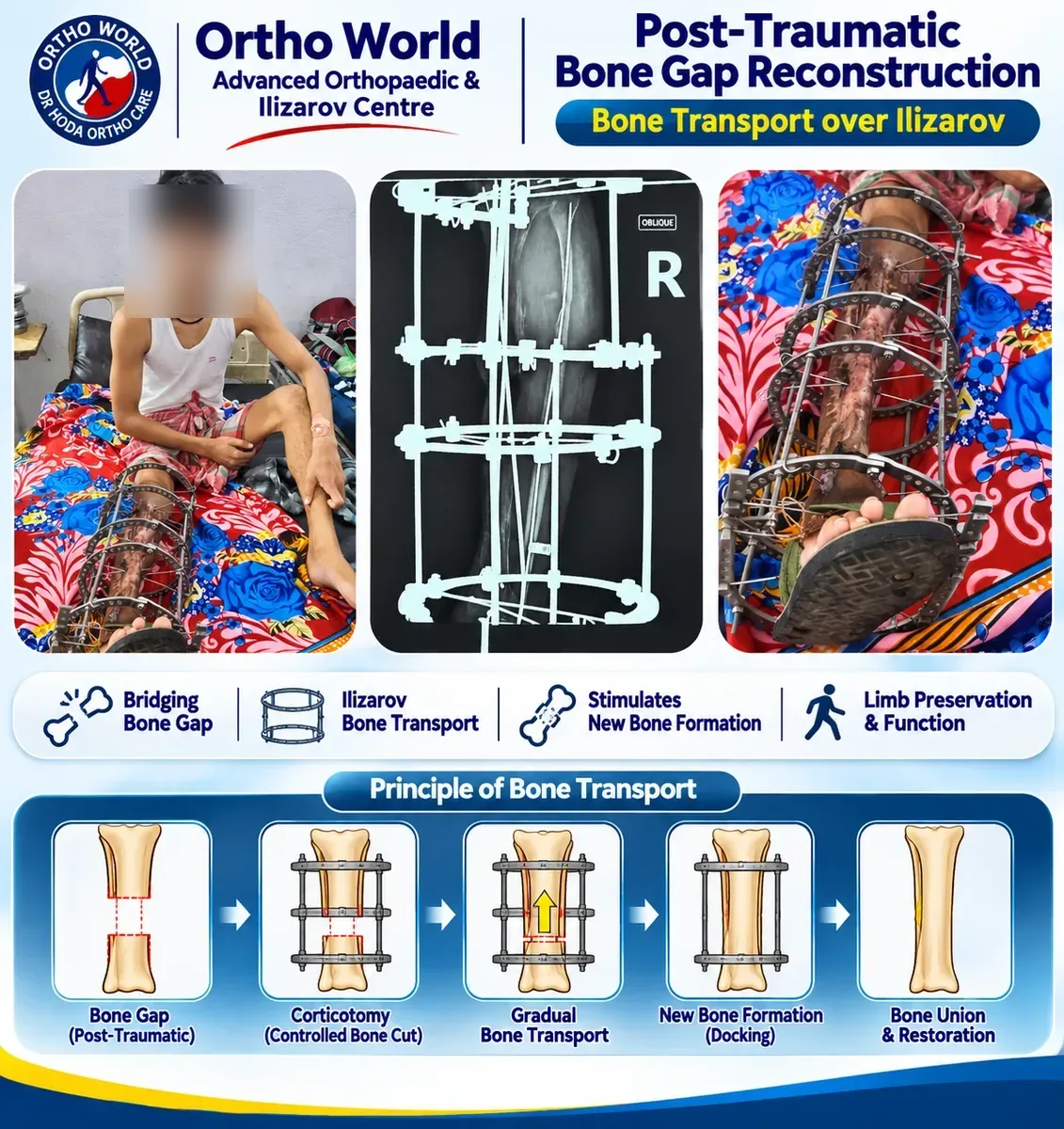
- Frame and bone cut – the Ilizarov frame is applied and a small cut (corticotomy) is made in healthy bone away from the gap.
- Latency – a rest of a few days lets healing begin.
- Transport – the freed segment is moved about 1 mm a day, in small steps, using the frame.
- Regenerate – new bone forms in the stretched area behind the moving segment (distraction osteogenesis).
- Docking – when the segment reaches the other bone end, the “docking site” is compressed and sometimes grafted to make it join.
- Consolidation – the frame stays until the new bone is strong enough.
Patient story – saved from amputation
Contains surgical images. Shared with the patient’s consent; faces and names are hidden.
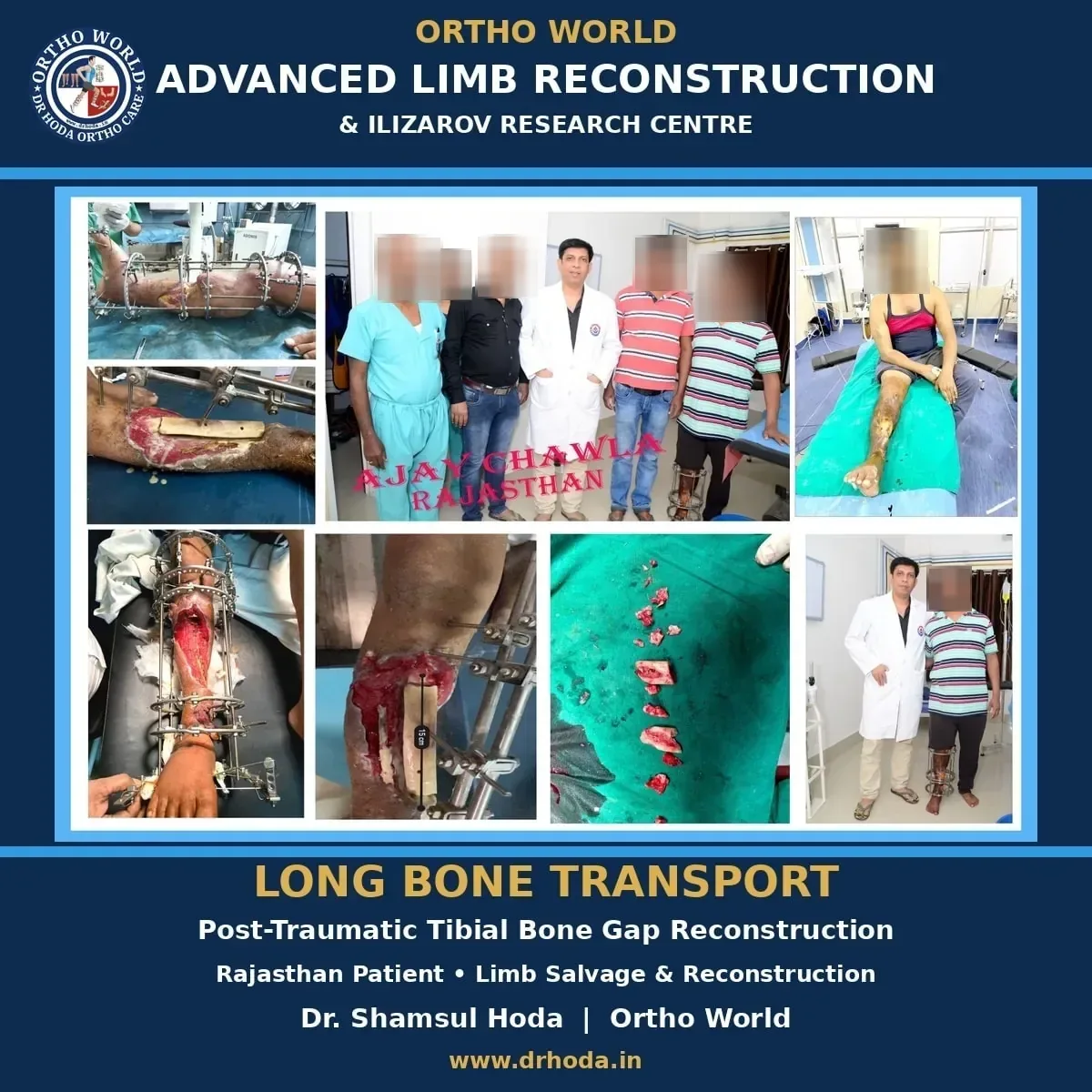
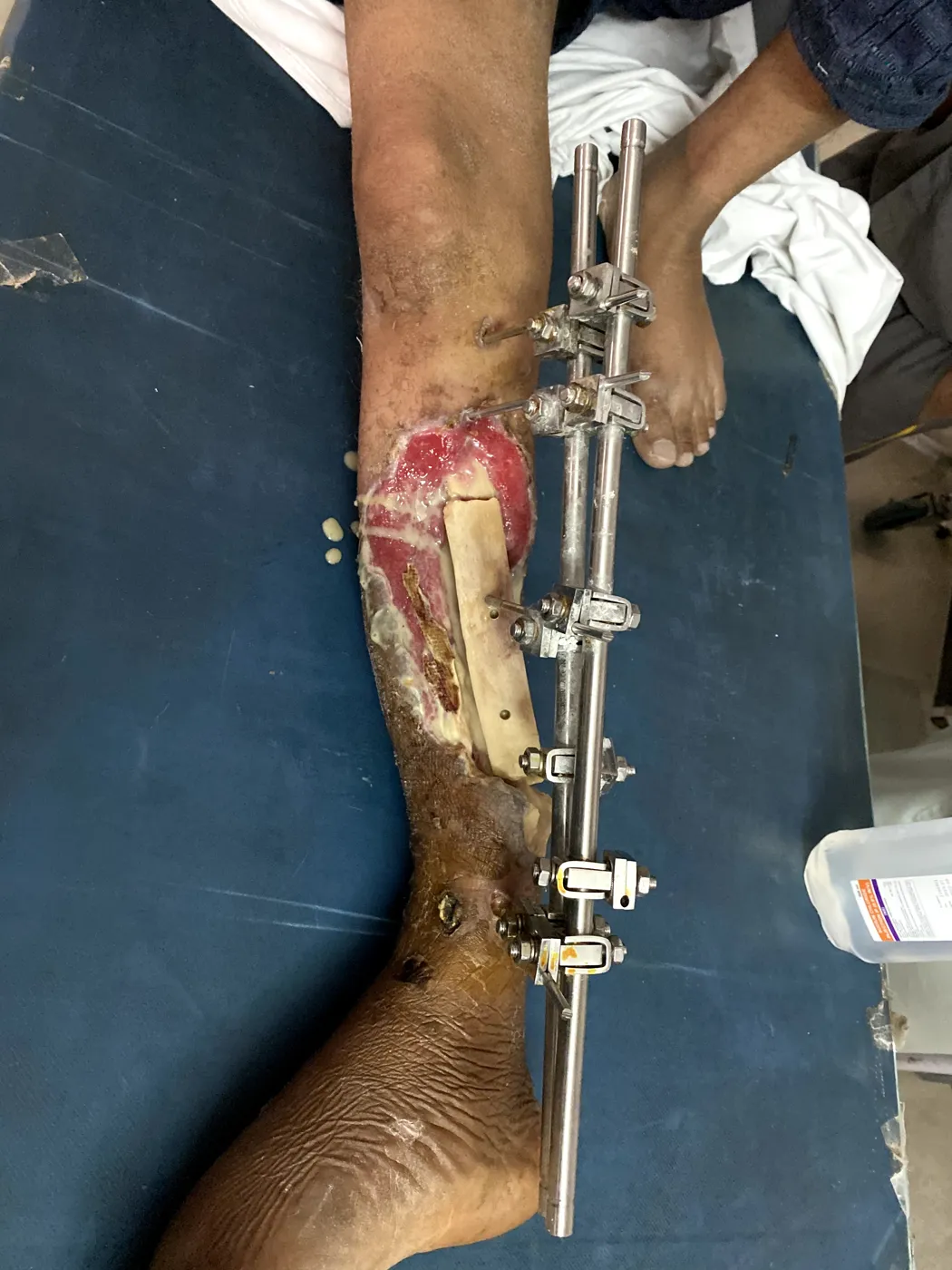
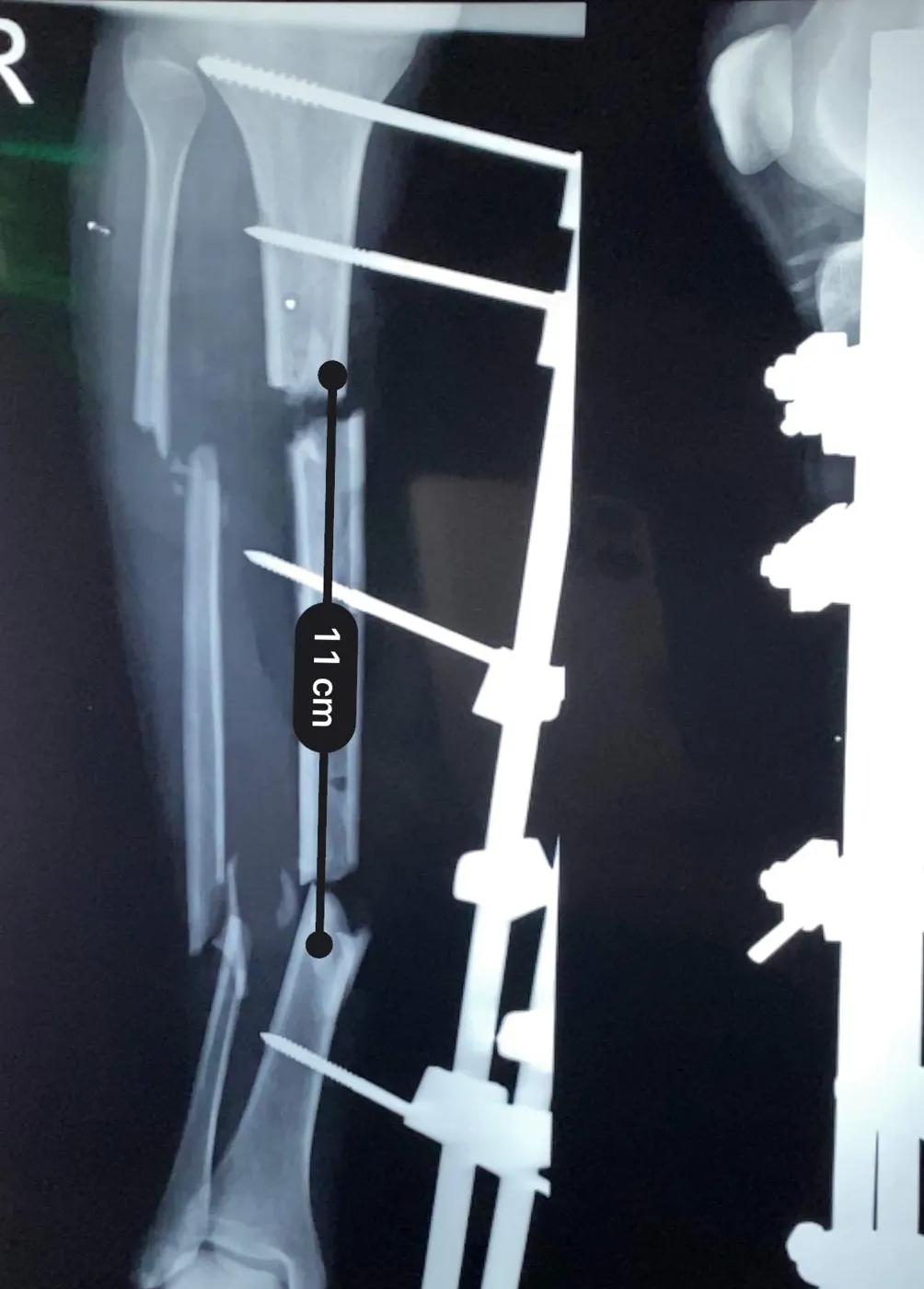
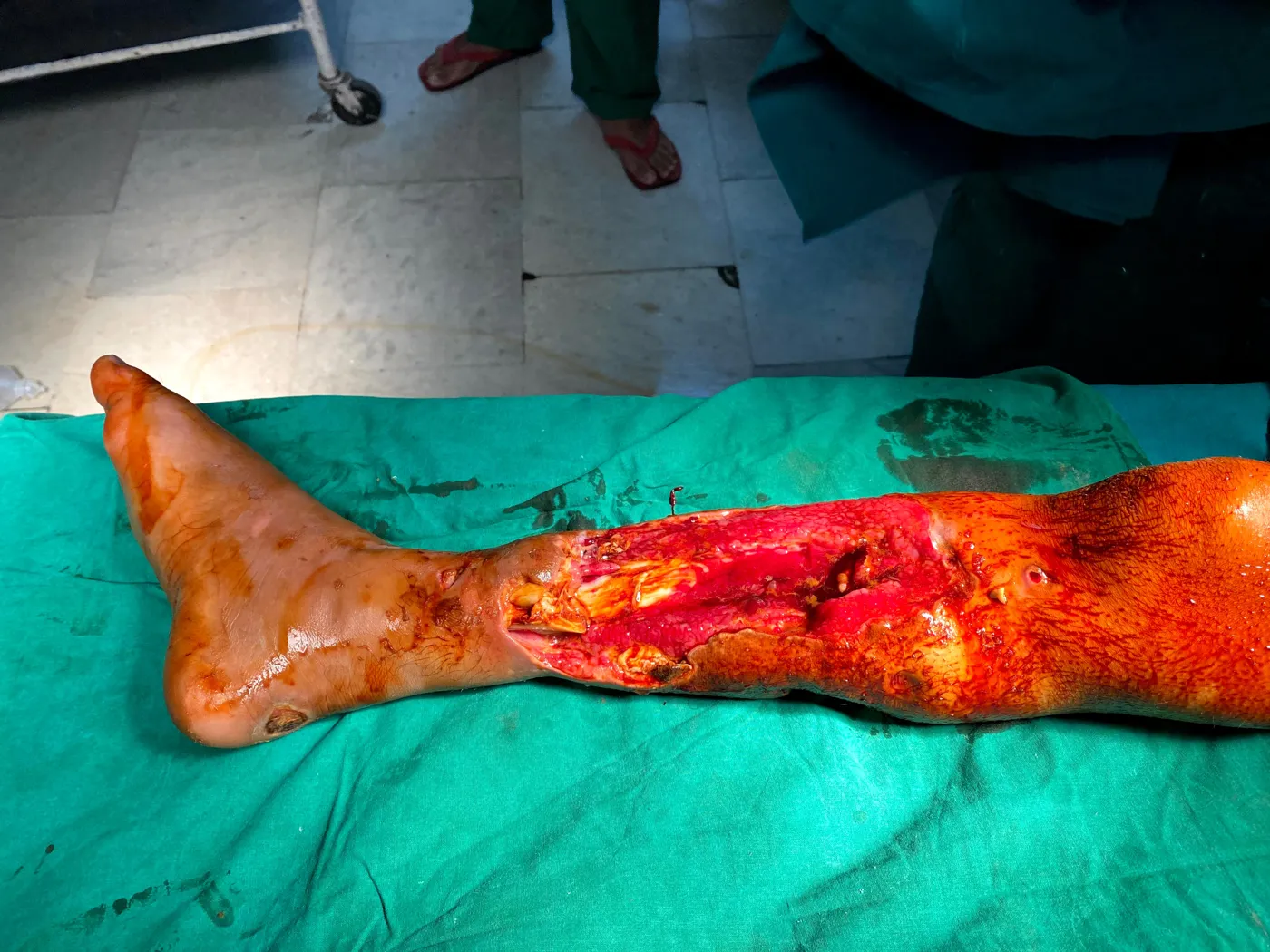
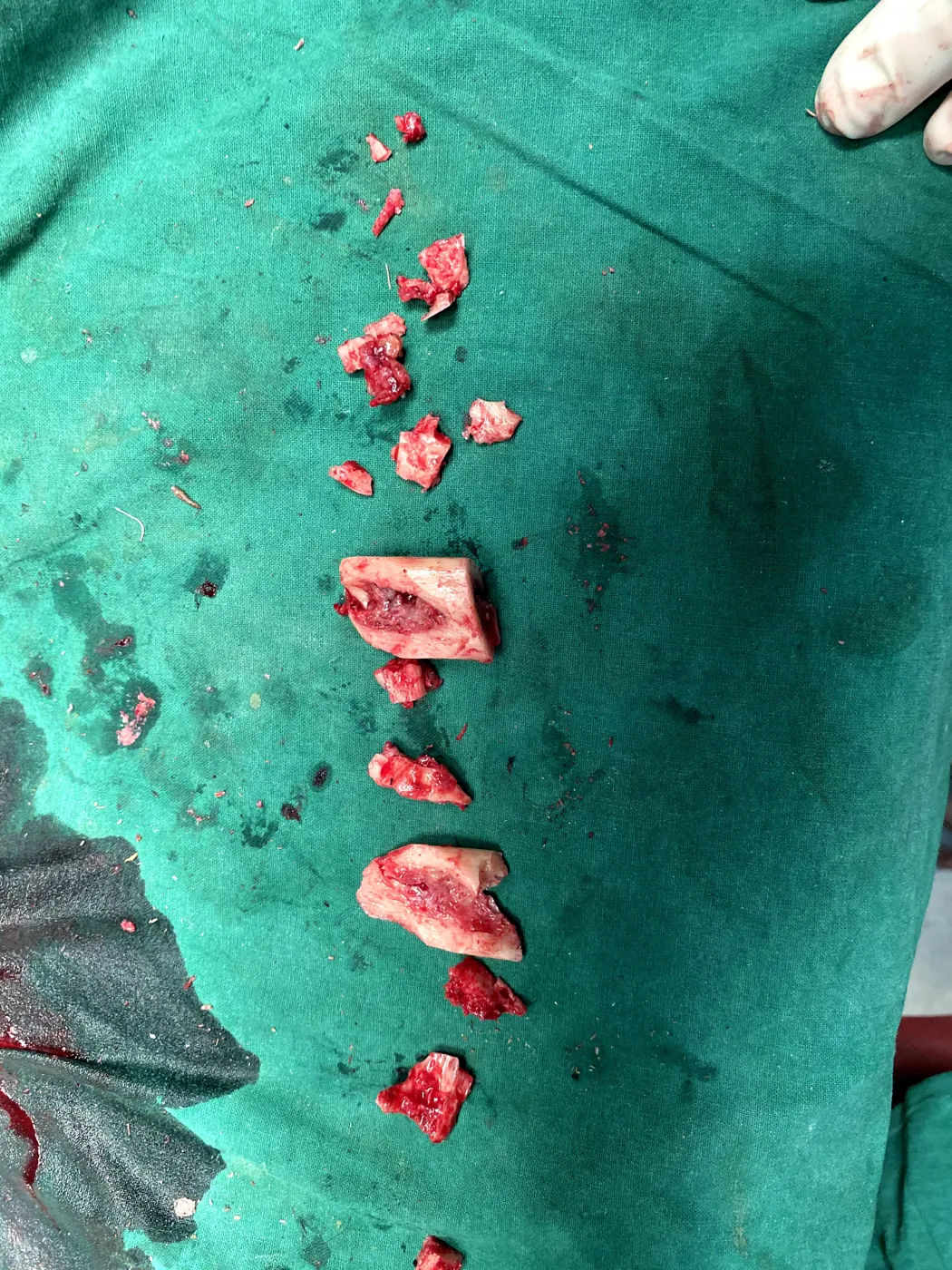
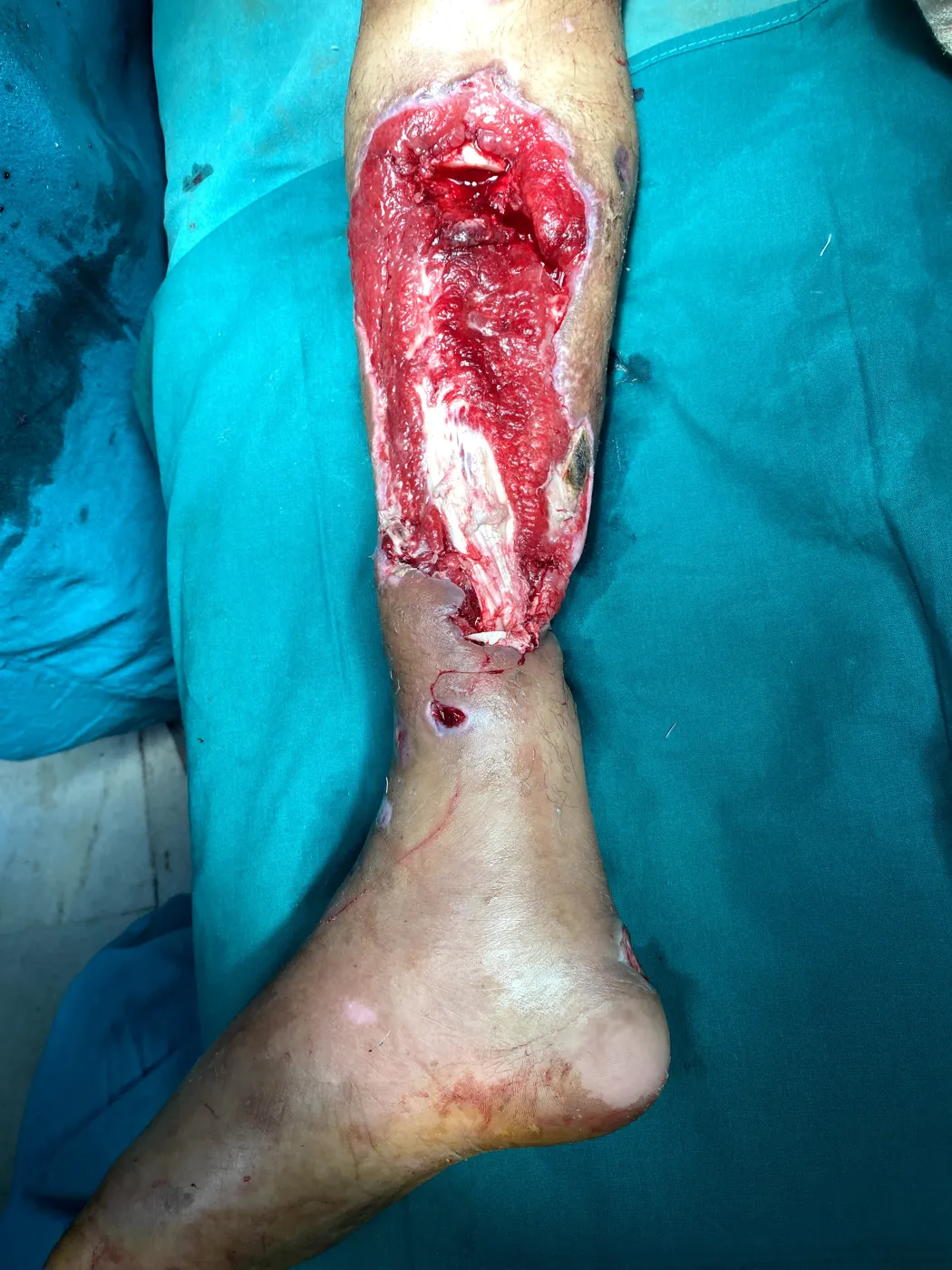
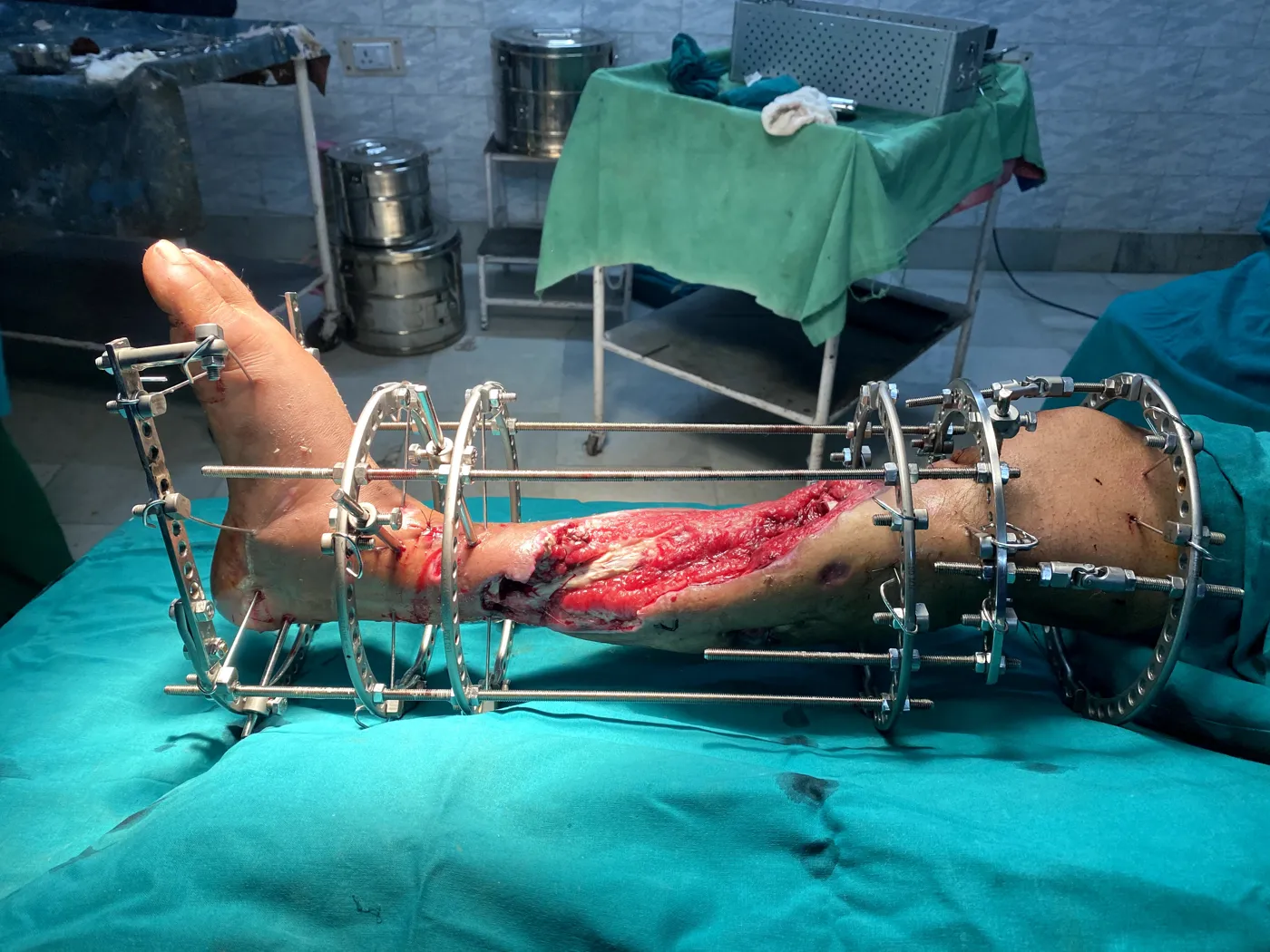
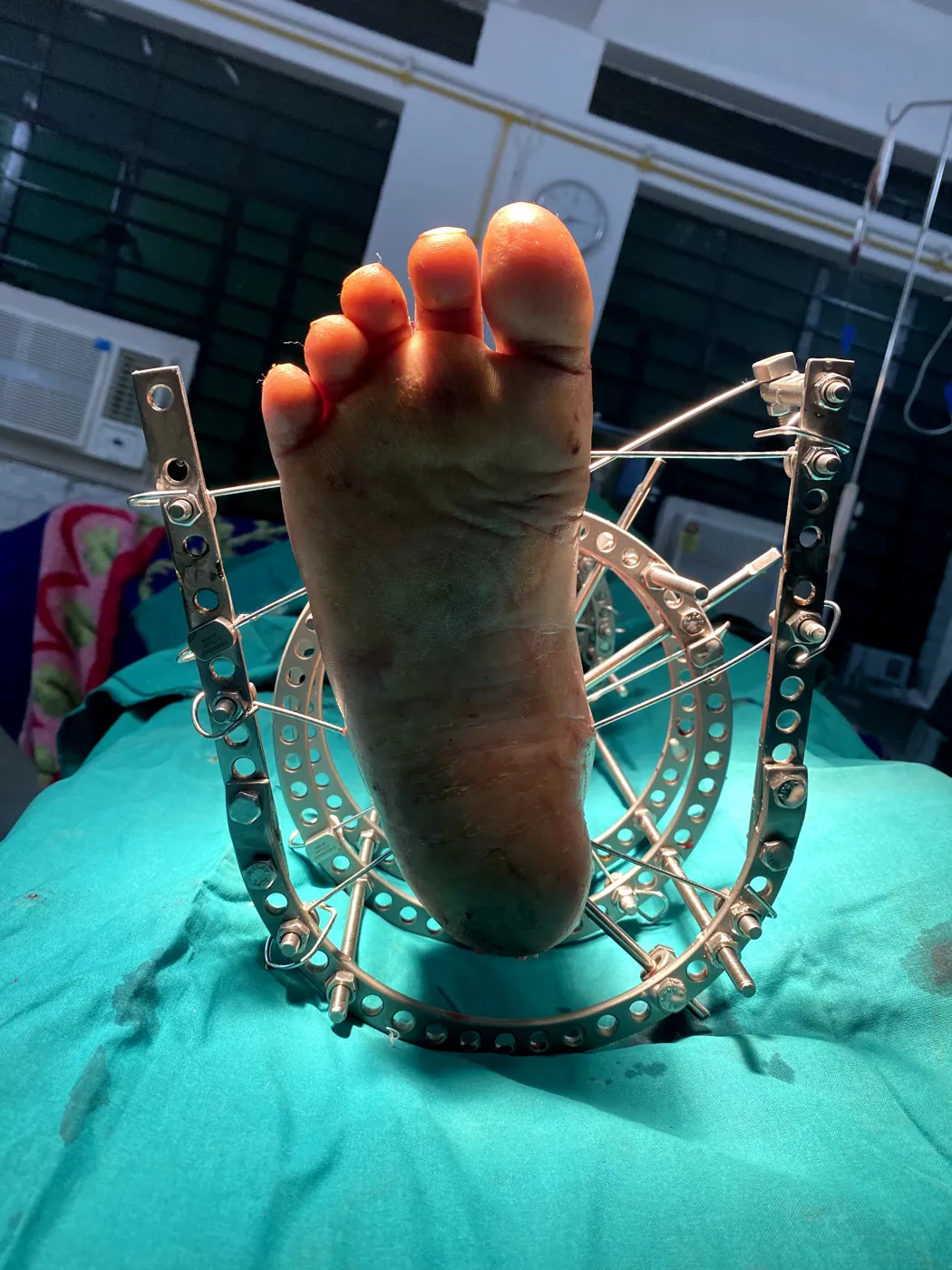
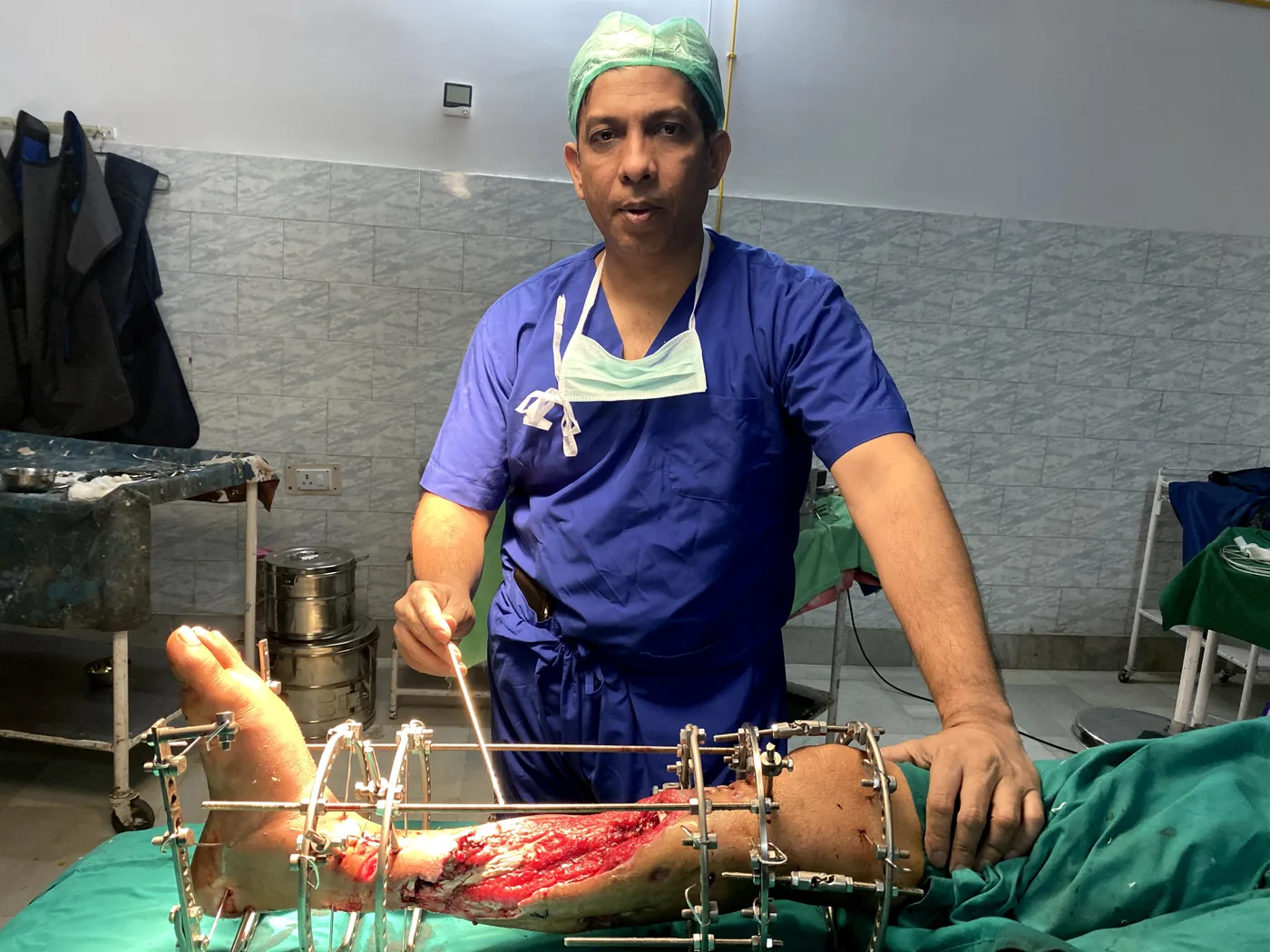
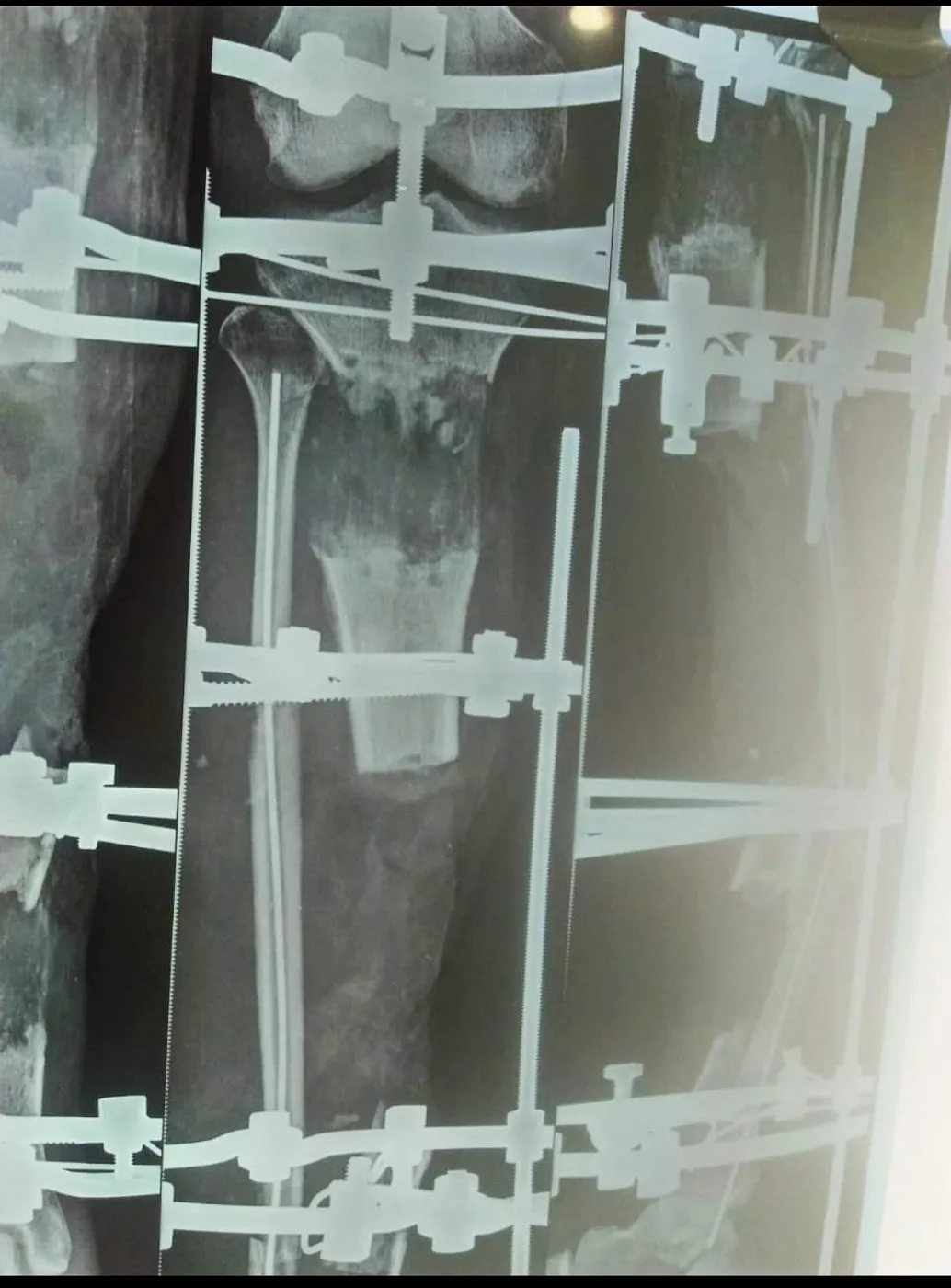
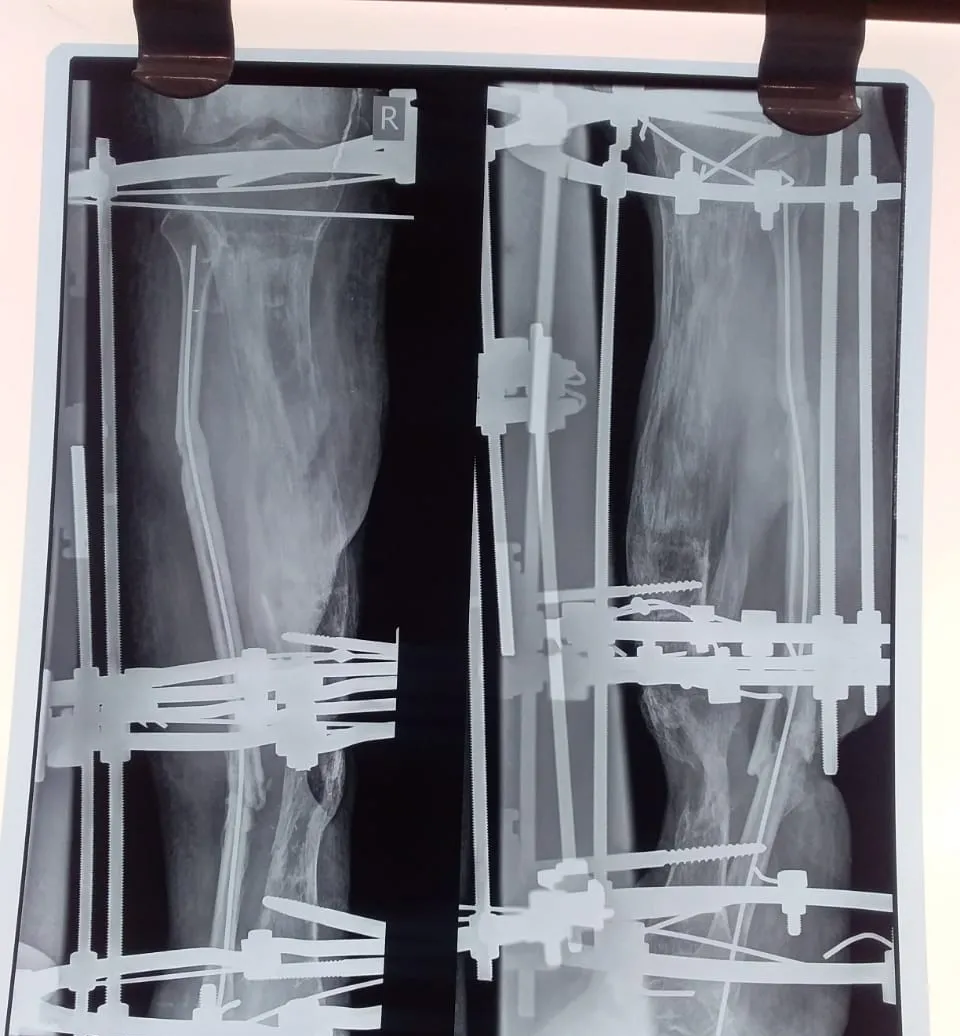
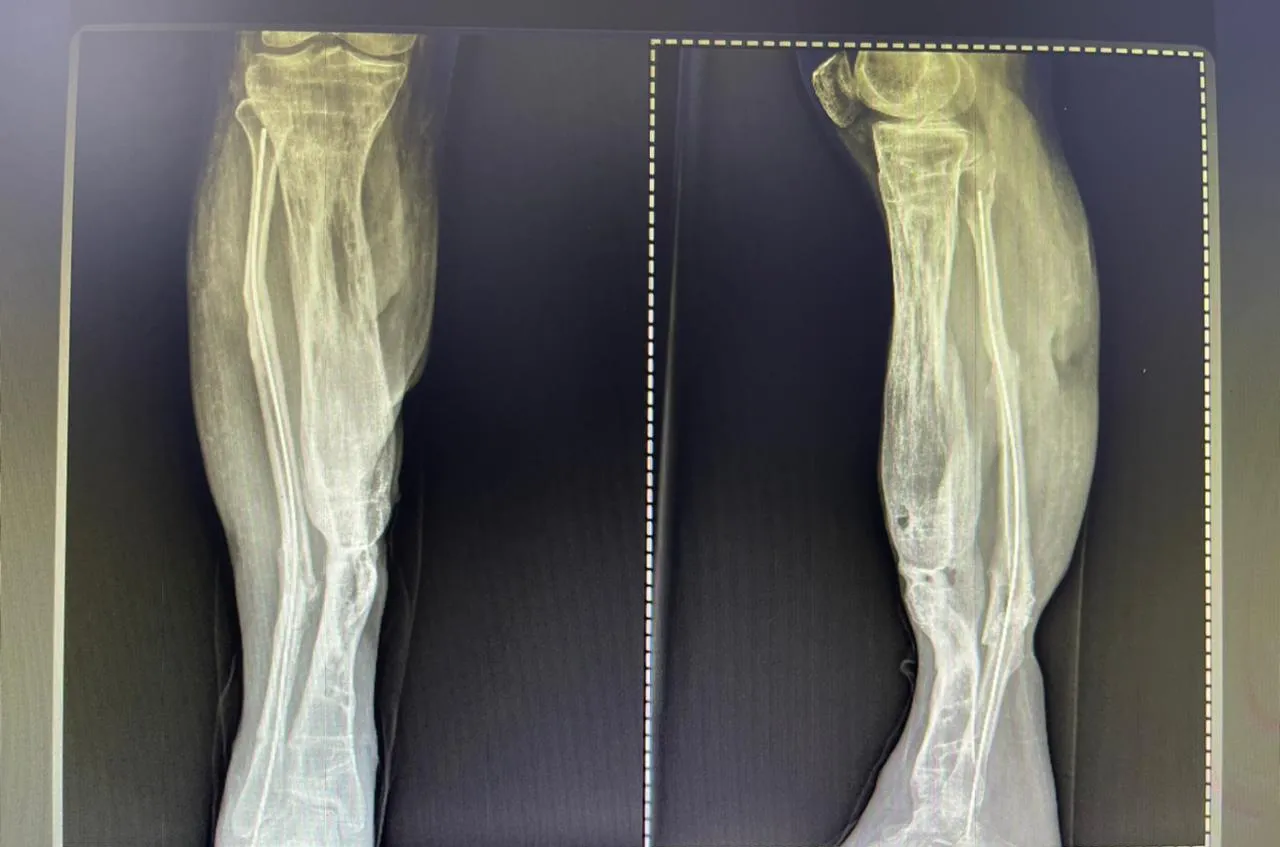
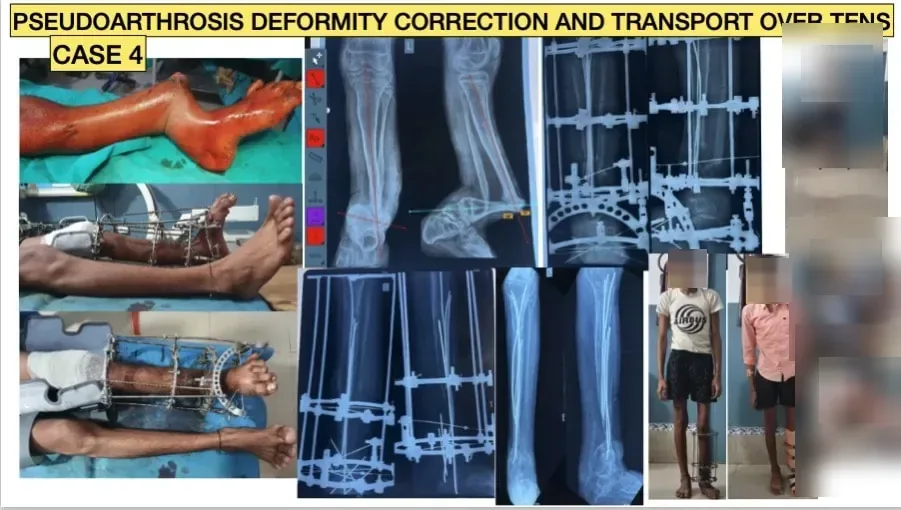
A young man from Rajasthan came to Ortho World after about a year in a monolateral fixator, with dead tibia exposed in an open wound. He had been advised amputation. At Ortho World all dead and infected bone was removed – leaving a long gap in the tibia – and an Ilizarov frame was applied for bone transport at two levels (trifocal), so that two segments of his own bone could be moved towards each other to close the gap.
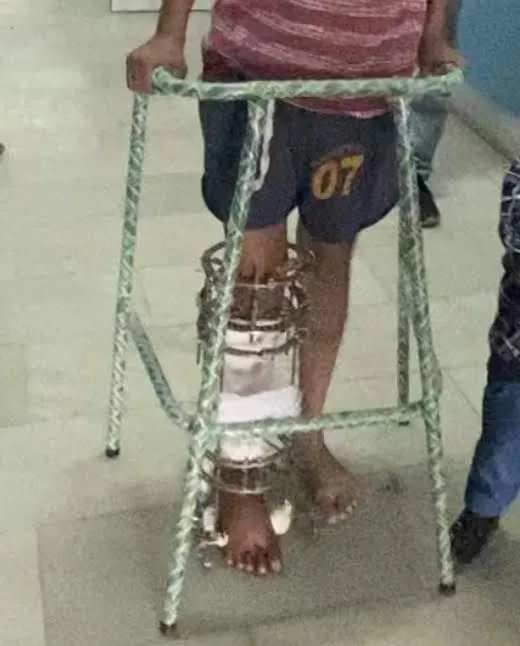
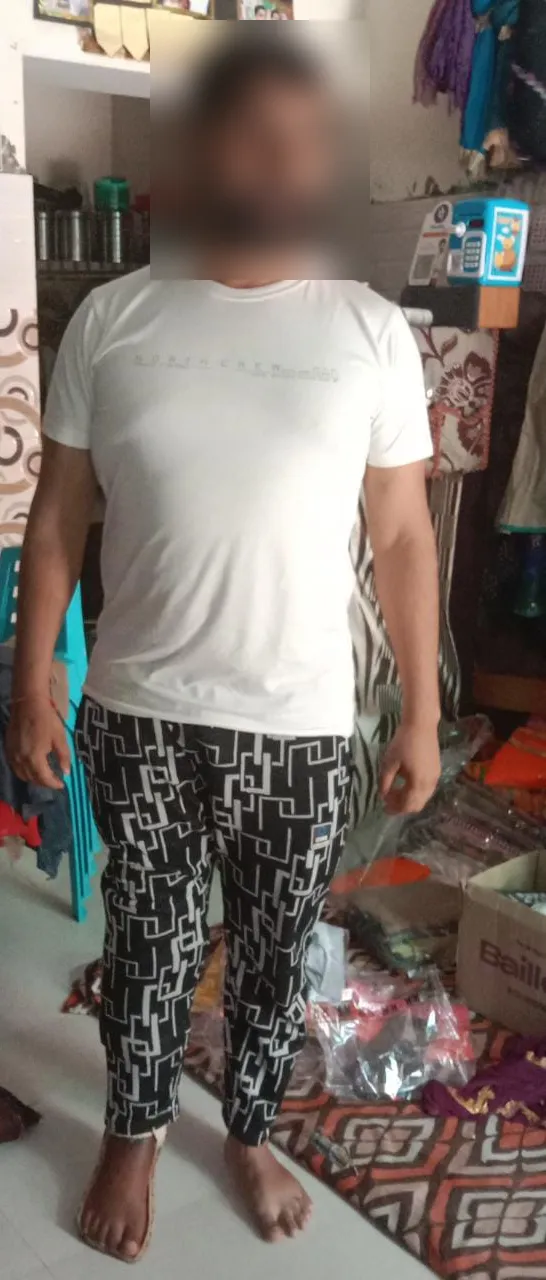
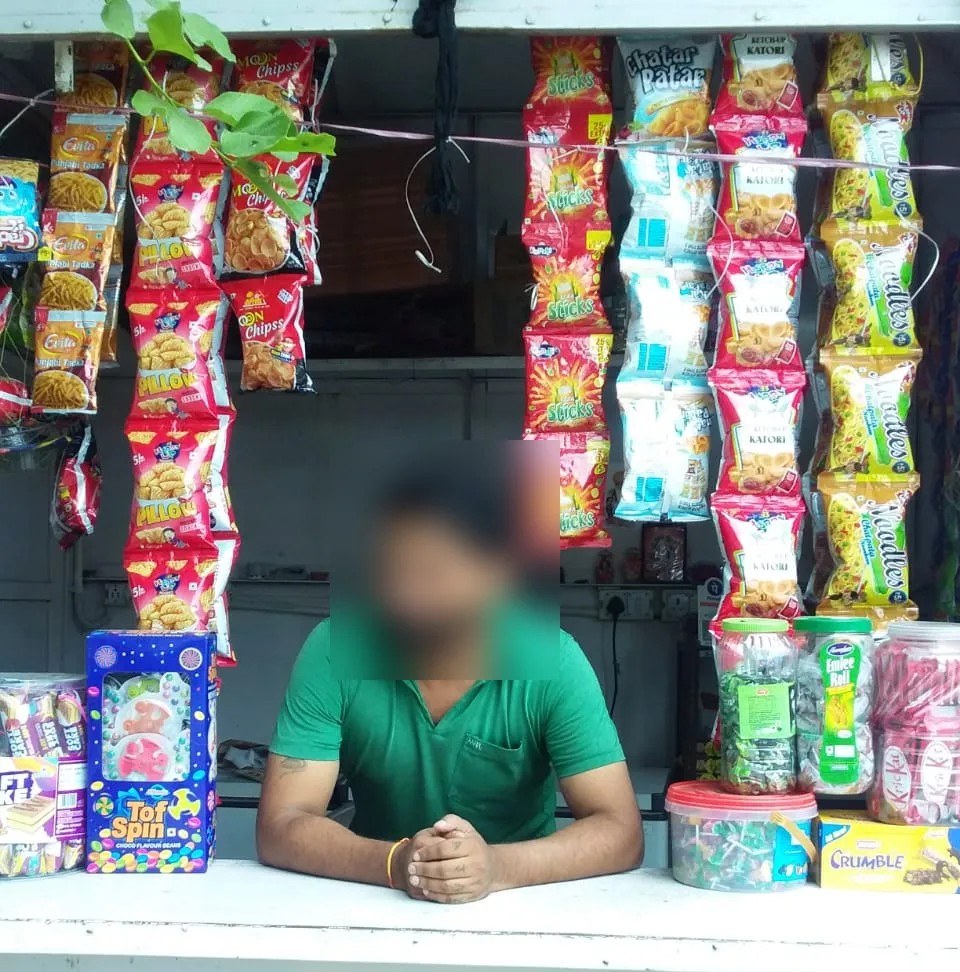
He walked in the frame within days. Over the following months the segments were moved about a millimetre a day, met at the docking site and healed. Treatment took about two years in the frame. Today he walks on his own leg and runs his own shop.
What this case teaches
- Debridement decides everything – every piece of dead bone must go, even if the gap becomes larger.
- Two levels halve the time per segment – trifocal transport moves two segments, each a shorter distance.
- Walking in the frame keeps the bone and muscles working through a long treatment.
- Long transports take time – soft tissue can be caught at the docking site and the frame stays a long while. Today Dr. Hoda often transports long segments over elastic nails to keep the segment aligned and allow earlier frame removal – see the clinical cases.
Planning for large bone gaps
- Smaller gaps – transport from one bone cut (bifocal).
- Larger gaps (usually more than about 8 cm) – two segments moved toward each other from two bone cuts (trifocal transport), which shortens the overall time.
- Transport over a nail or flexible (TENS) nails – in selected patients an internal nail guides the moving bone and can allow earlier frame removal; used only when infection is controlled.
We decide the method after debridement, when the exact size of the gap is known.
Variations we use
- Classic Ilizarov transport – frame alone
- Transport over a nail – an intramedullary nail or flexible (TENS) nail guides the segment and can shorten frame time in selected cases
- Double-level (bifocal/trifocal) transport – for very large gaps
- Acute shortening and re-lengthening – for selected gaps with soft-tissue loss
Who may benefit?
- Bone gaps in the tibia, femur or humerus
- Infected non-union after removal of dead bone
- Patients advised amputation because of bone loss
What to expect
Treatment is long and needs commitment – the frame is worn through transport and consolidation, often for several months depending on the gap. Most patients walk with support. Physiotherapy keeps joints moving. Regular X-rays check transport and healing.
Risks and limitations
Pin-site infection, joint stiffness, delayed healing at the docking site, poor regenerate bone, and the need for additional procedures such as docking-site grafting. Dr. Hoda will discuss these for your case.
Treatment in Patna & Hajipur
Consultations at Ortho World Patna (Kankarbagh) and Hajipur. Send X-rays and operation notes on WhatsApp (77658 67111) for an initial opinion.
Watch
 ▶
 ▶
 ▶
 ▶
 ▶
 ▶
 ▶
 ▶
When to call us immediately
Redness, pus or bad smell around a wound or pin · fever · increasing pain, numbness or tingling · a loose or broken wire, pin or ring · cold, pale or blue toes or fingers.
Patna +91 77658 67111 · Hajipur 24-hour emergency +91 70704 61111
Frequently asked questions
How big a gap can bone transport fill?
Is bone transport painful?
Why not just use a bone graft?
Can I go home during transport?
Is treatment covered by insurance?
A note from Dr. Shamsul Hoda
Every limb and every patient is different. We plan carefully, explain the options honestly and stay with you through recovery.
Related
Bone Infection · Non-union · Limb Salvage · Read: bone transport infected tibial gap · Read: distraction osteogenesis biology
Ready to discuss your case?
Book a consultation in Patna or Hajipur, or send your X-rays on WhatsApp for an initial opinion.
