
Adult & Neglected Clubfoot Treatment in Patna
Gradual correction of neglected, relapsed and adult clubfoot – and other complex foot deformities – using the Ilizarov method at Ortho World, Patna and Hajipur.
On this page
What is clubfoot?The four parts of a clubfoot deformityWhy the Ilizarov method?See it in 3D – from Dr. Hoda’s textbookOur patients – clubfoot corrected with the Ilizarov frameWhy we correct slightly “past straight”Who may benefit?How adult clubfoot correction is doneWhat to expectOther options we will discussPossible problems we watch forTreatment in Patna & HajipurFAQWhat is clubfoot?
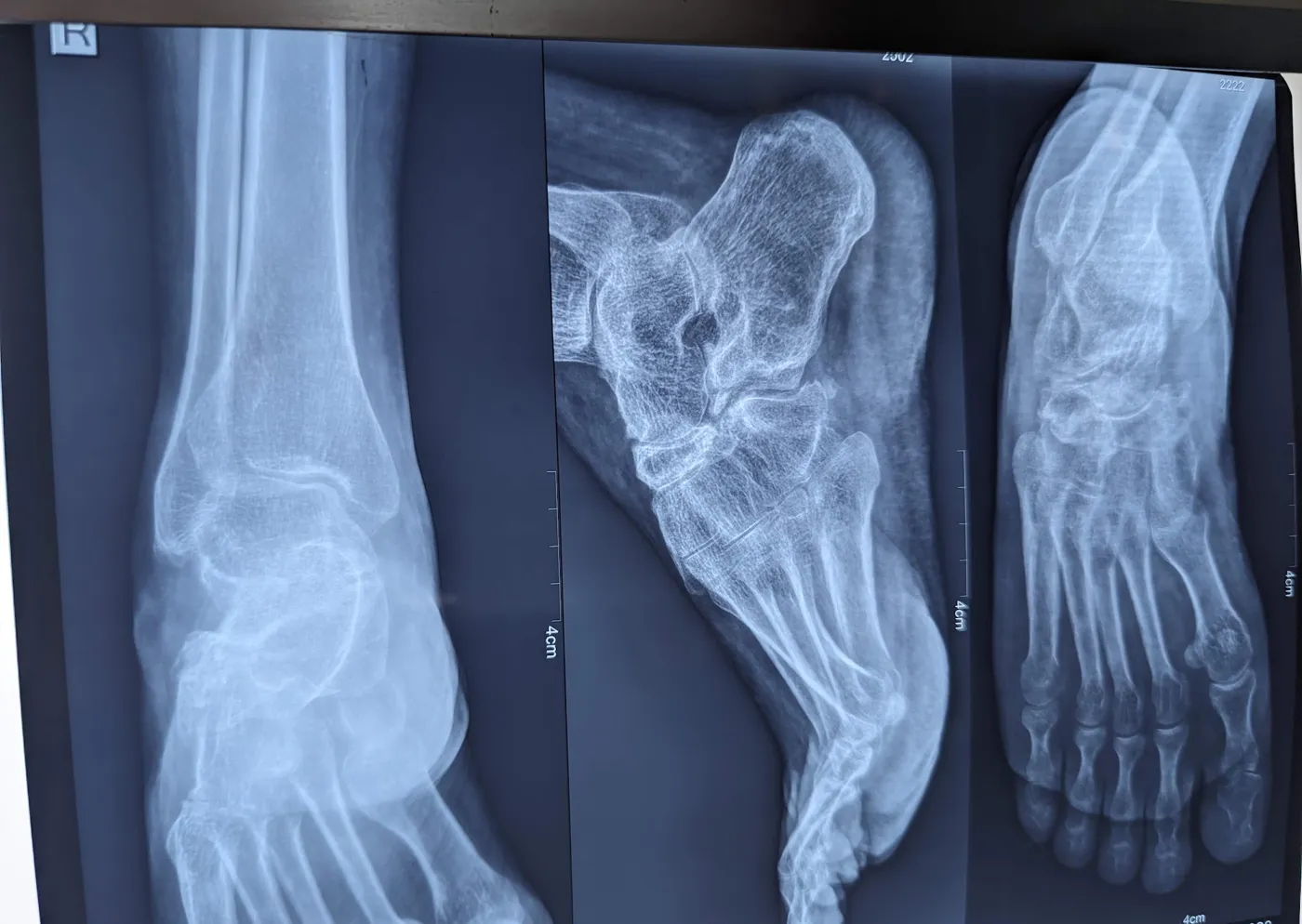
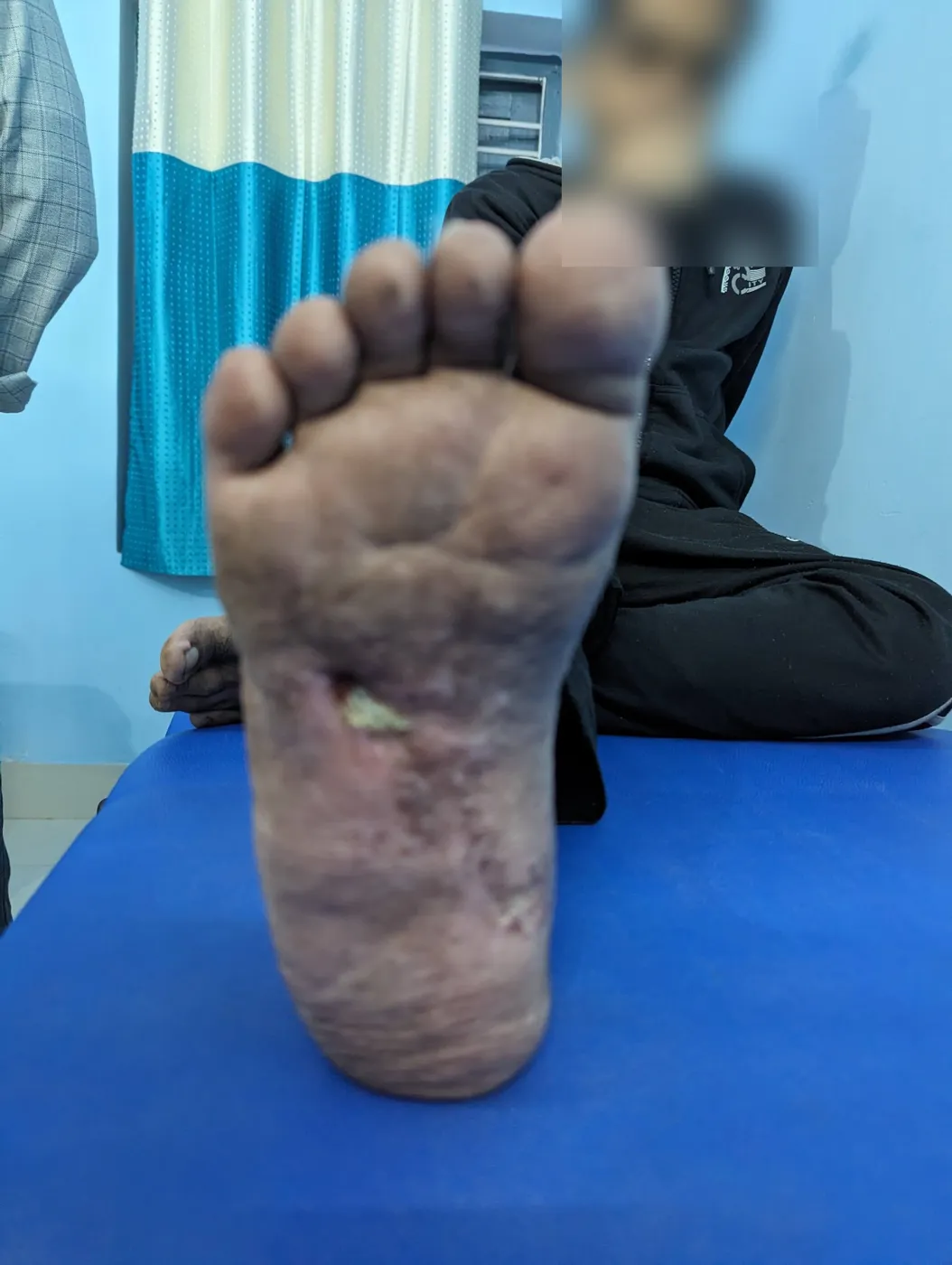
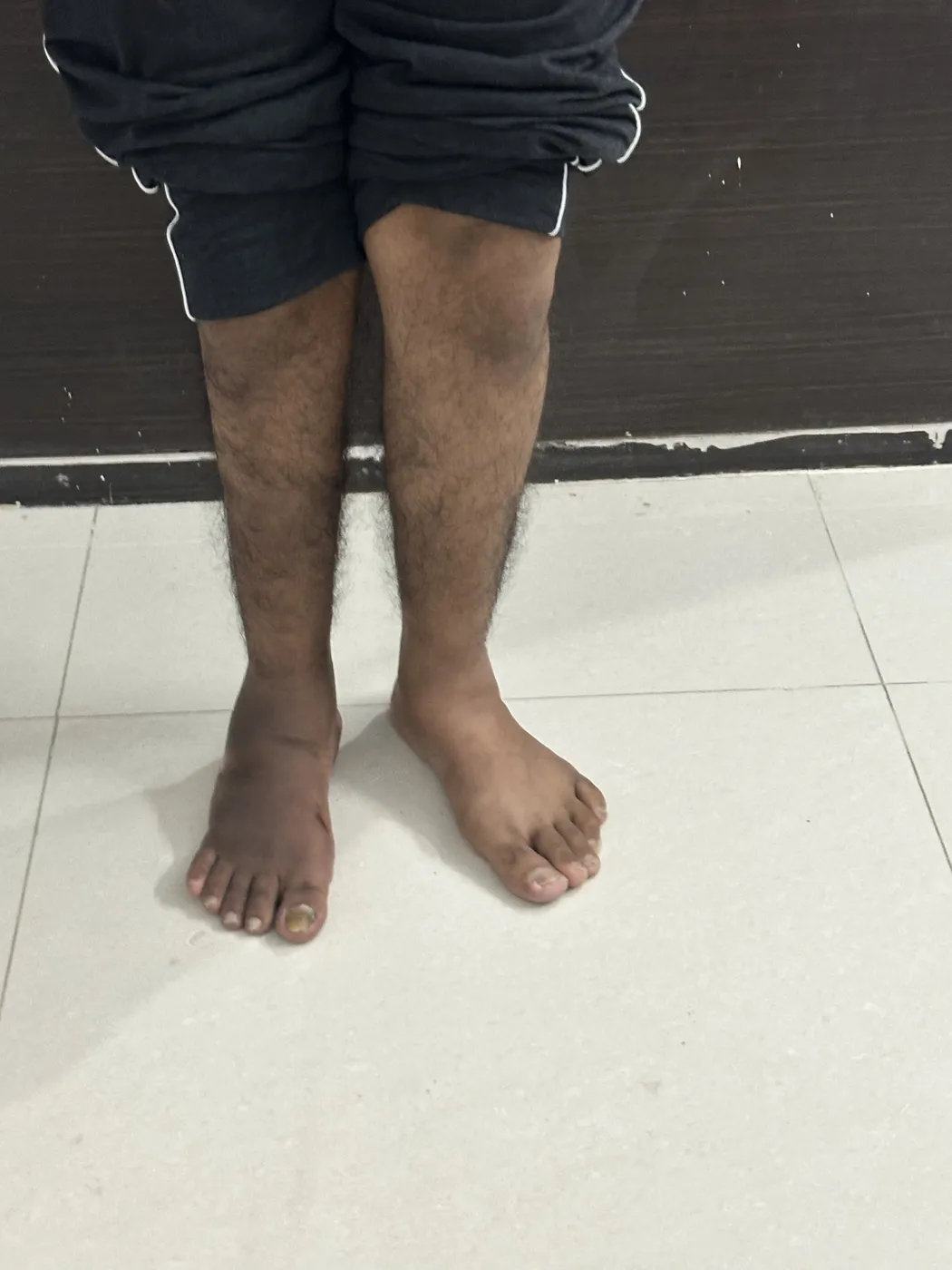
Clubfoot (congenital talipes equinovarus, CTEV) is a deformity in which the foot is turned inward and downward. In infants it is usually treated with the Ponseti method of serial casting. If a child misses early treatment, or the deformity comes back, the foot becomes stiff with age – called neglected or relapsed clubfoot. In older children and adults, walking on the outer edge or top of the foot causes painful calluses, skin breakdown, difficulty with shoes and limited walking.
The four parts of a clubfoot deformity
Doctors describe clubfoot with four parts, often called CAVE:
- C – Cavus: a high arch in the middle of the foot
- A – Adduction: the front of the foot turned inward
- V – Varus: the heel turned inward
- E – Equinus: the foot pointing downward with a tight heel cord
In adults these are stiff and partly bony, so each part is corrected separately and gradually with the Ilizarov frame.
Why the Ilizarov method?
A rigid clubfoot in an older child or adult cannot be corrected by casting alone, and traditional surgery may need large bone cuts or fusion, which shortens and stiffens the foot. The Ilizarov method corrects the foot gradually: small daily adjustments stretch the tight tissues and reposition the bones over several weeks, so nerves, blood vessels and skin adapt safely. Bone cuts are added only when stiff bone blocks correction.
See it in 3D – from Dr. Hoda’s textbook
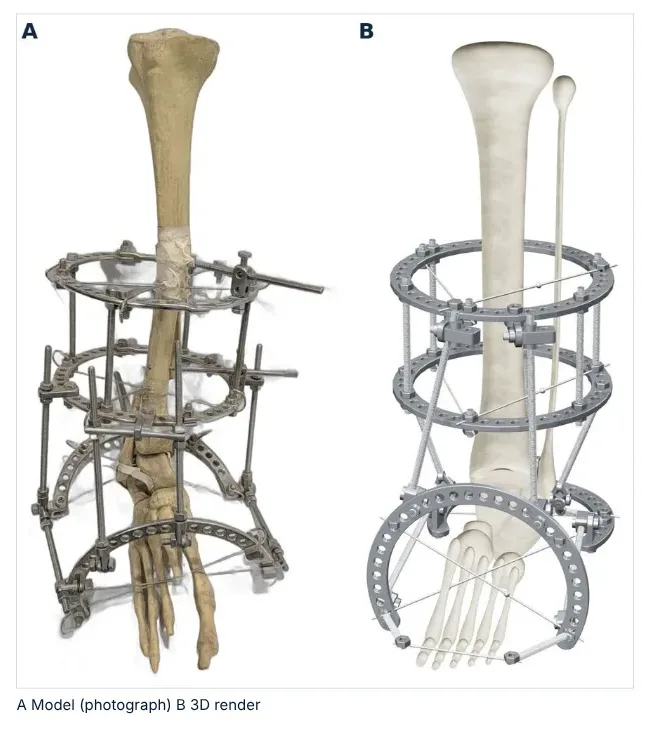
These animations, 3D renders and diagrams come from Chapter 101 – Clubfoot Correction in the Older Child and Adult of Dr. Shamsul Hoda’s free textbook, Ilizarov Principles & Limb Reconstruction. They show what is wrong inside a neglected clubfoot, and how the frame gently unwinds it.
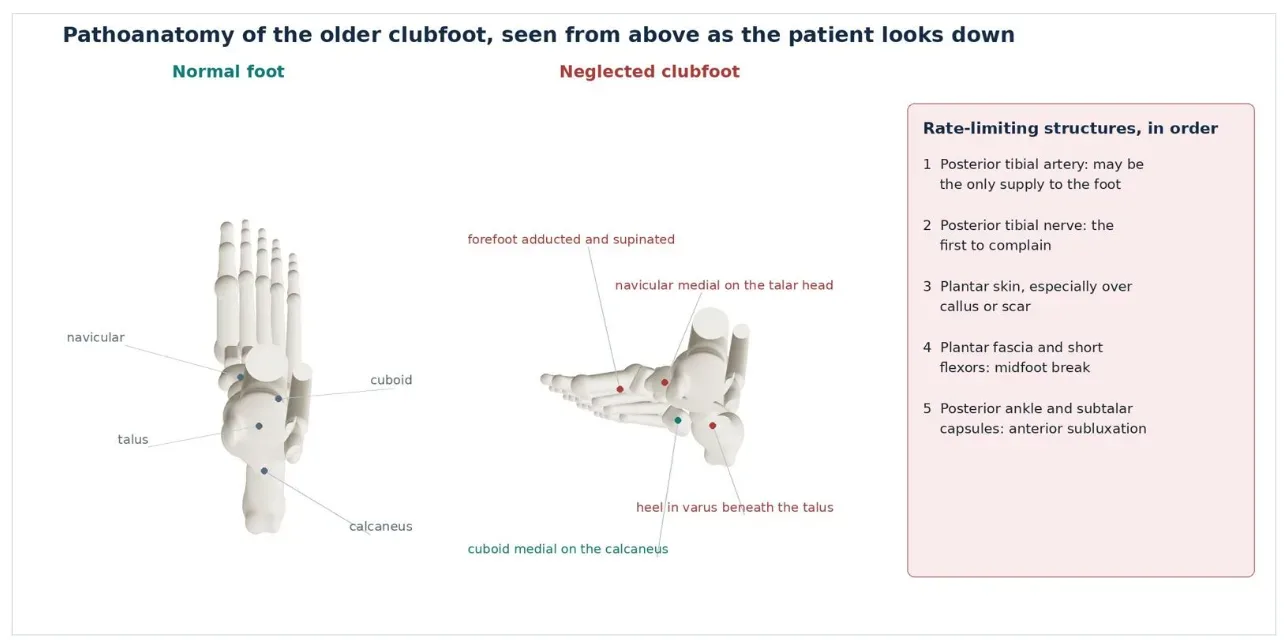
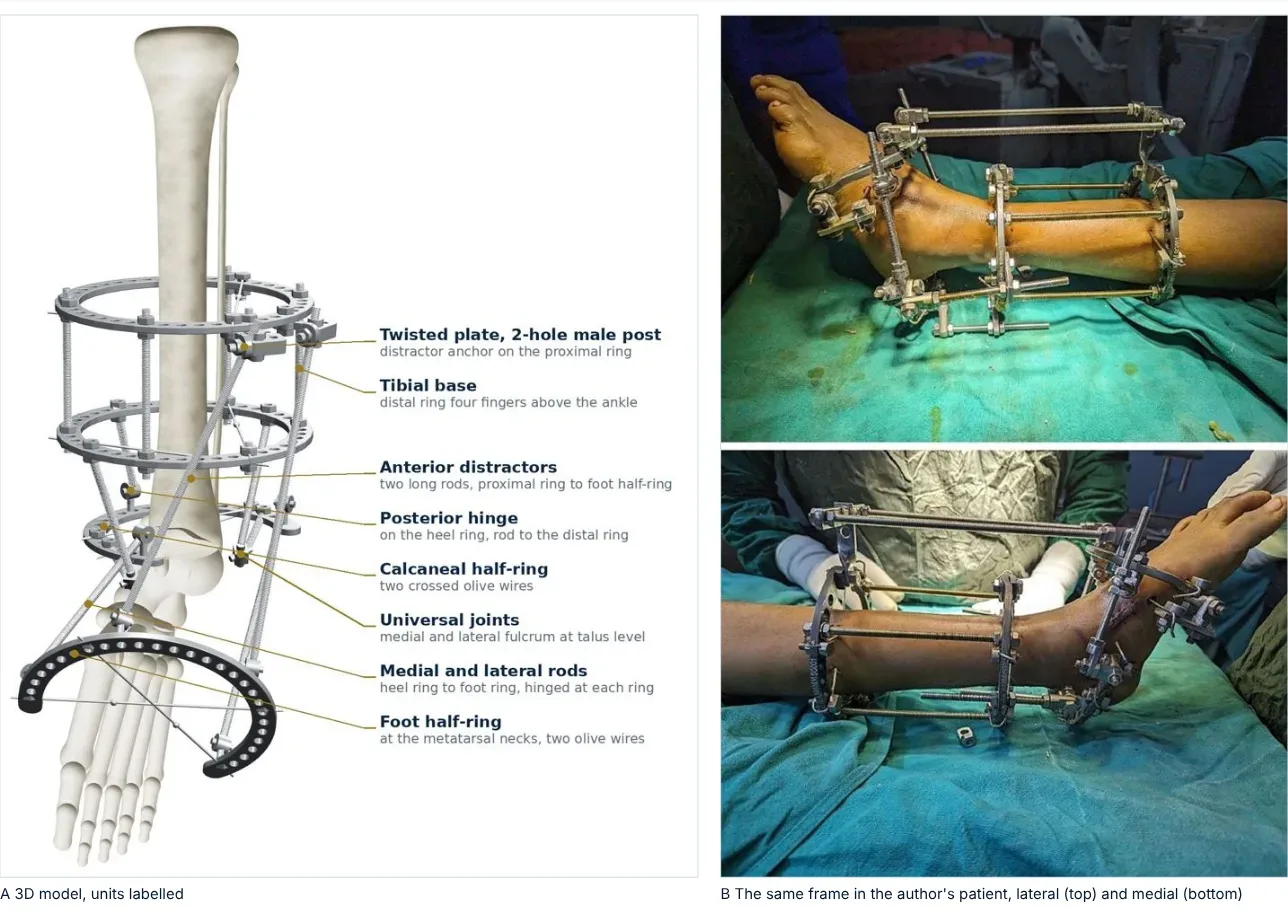
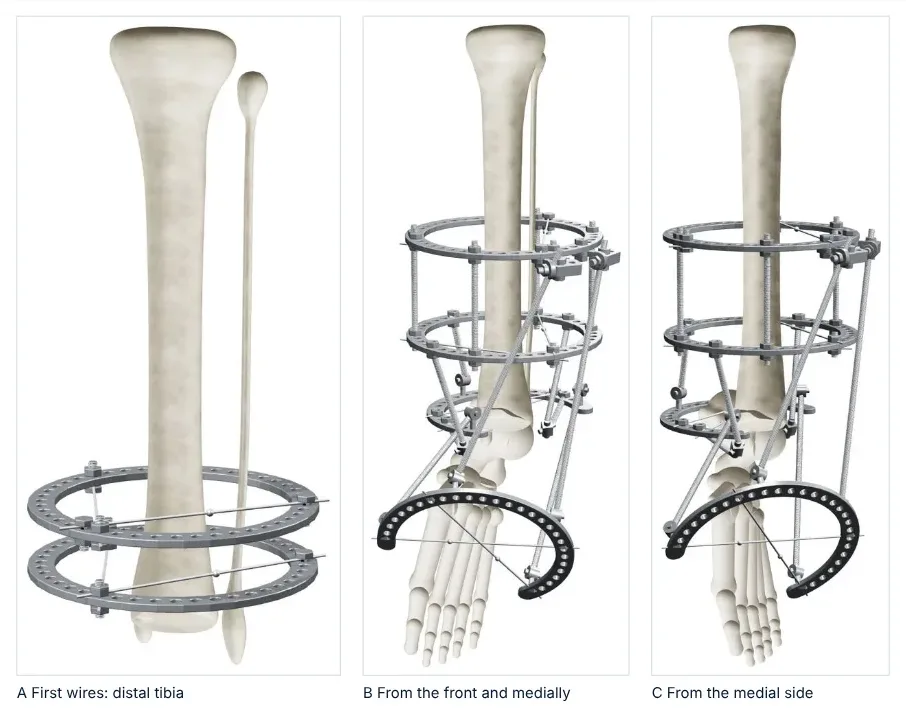
Interactive model: Congenital Clubfoot (S0370) by NCH Advanced Projects Laboratory (APL) on Sketchfab, shown through the owner’s public embed.
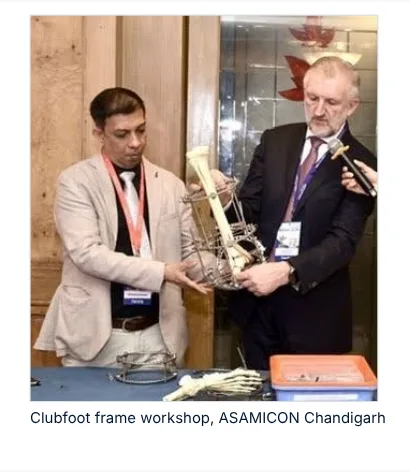
For doctors – the clubfoot frame on a saw-bone, step by step
From Dr. Hoda’s saw-bone workshop (textbook Figures 101.41–101.46).
Read the full chapter (for doctors) → The free textbook
Our patients – clubfoot corrected with the Ilizarov frame
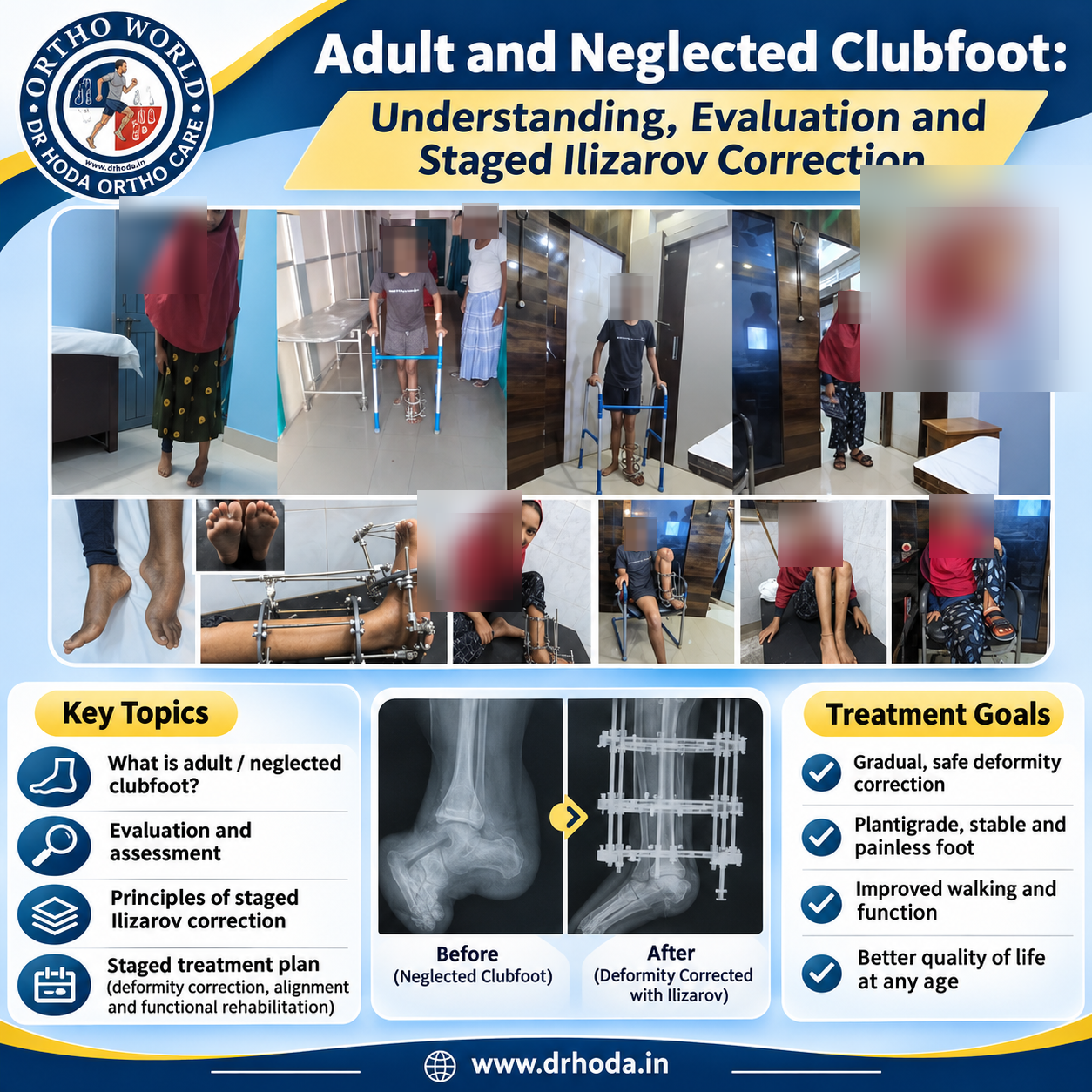
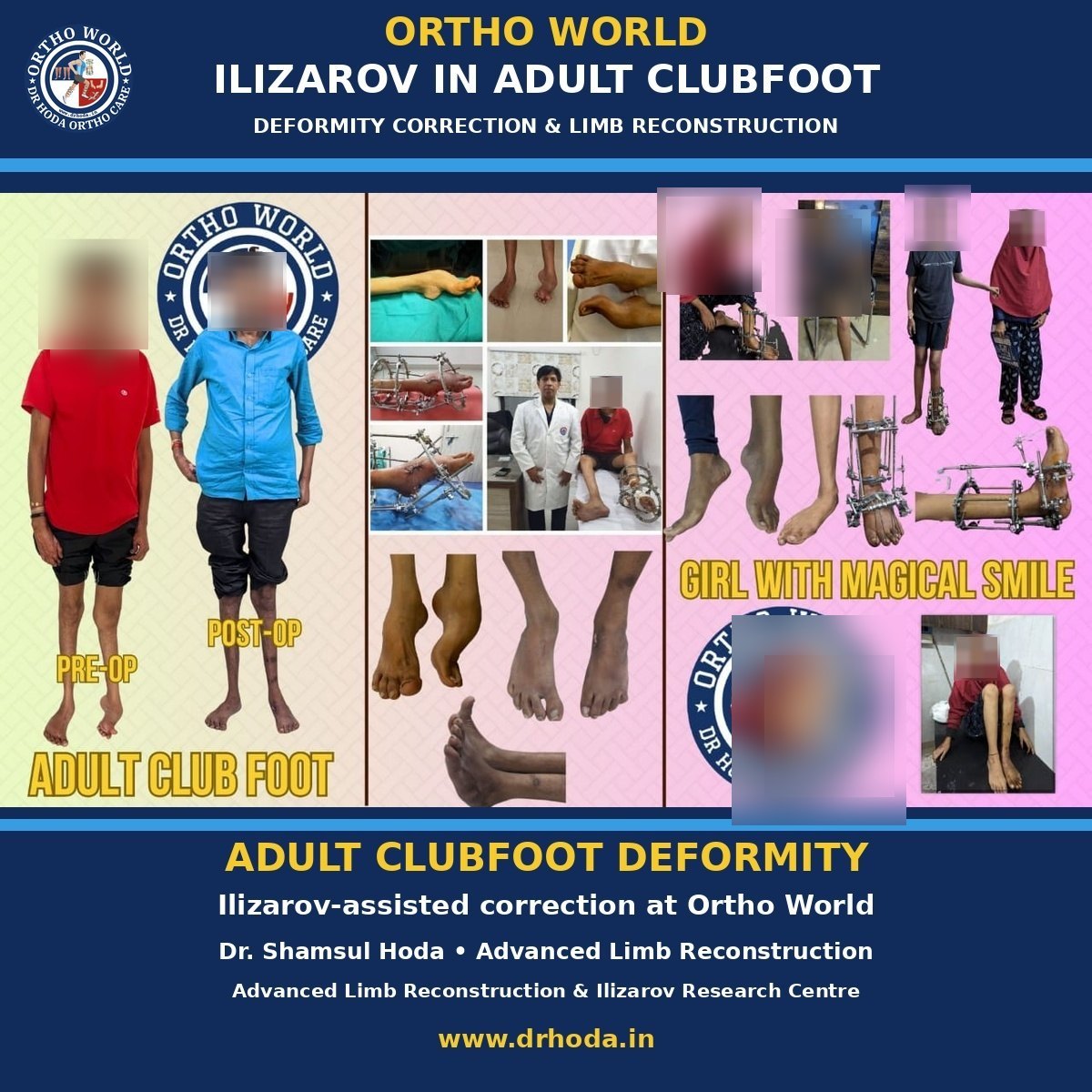
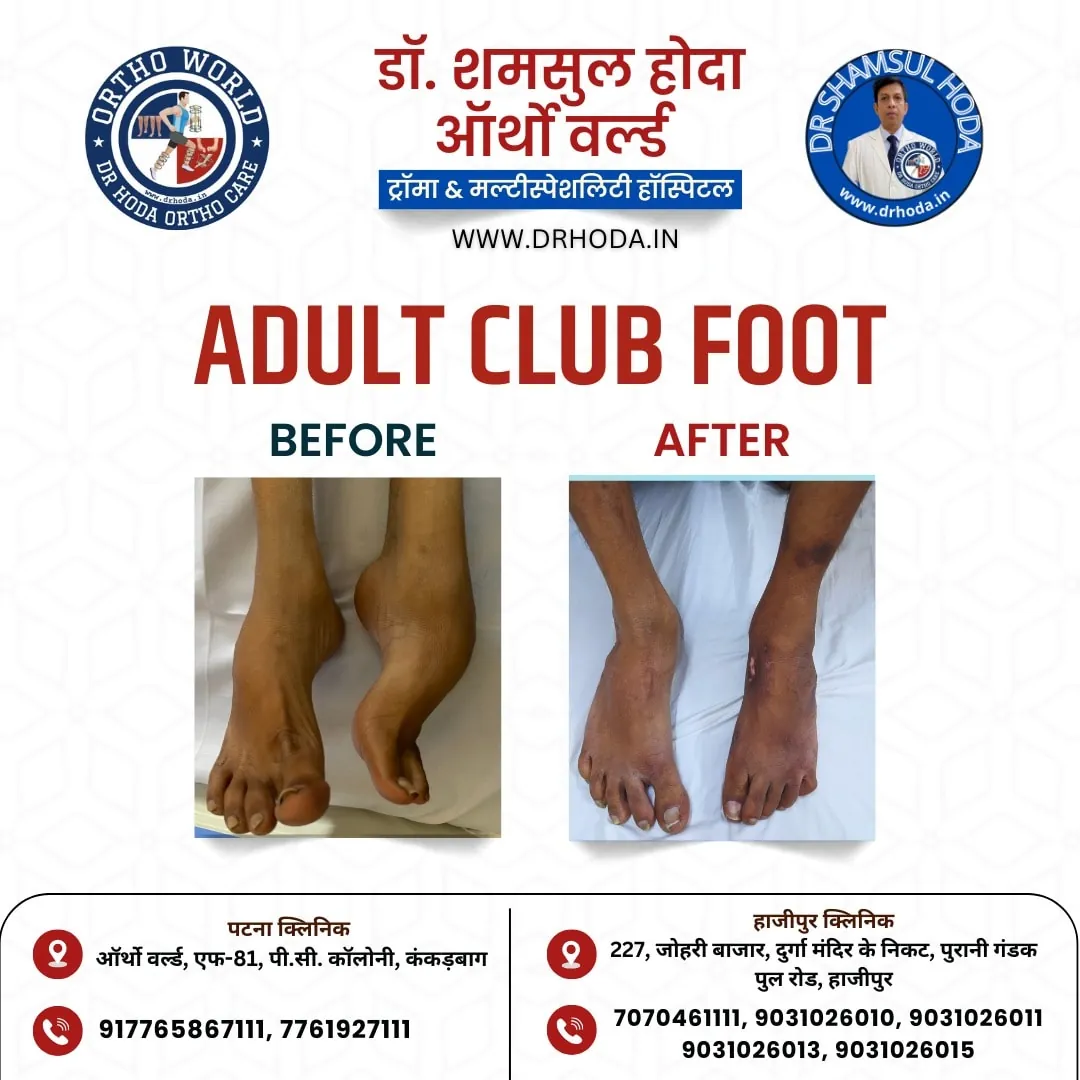
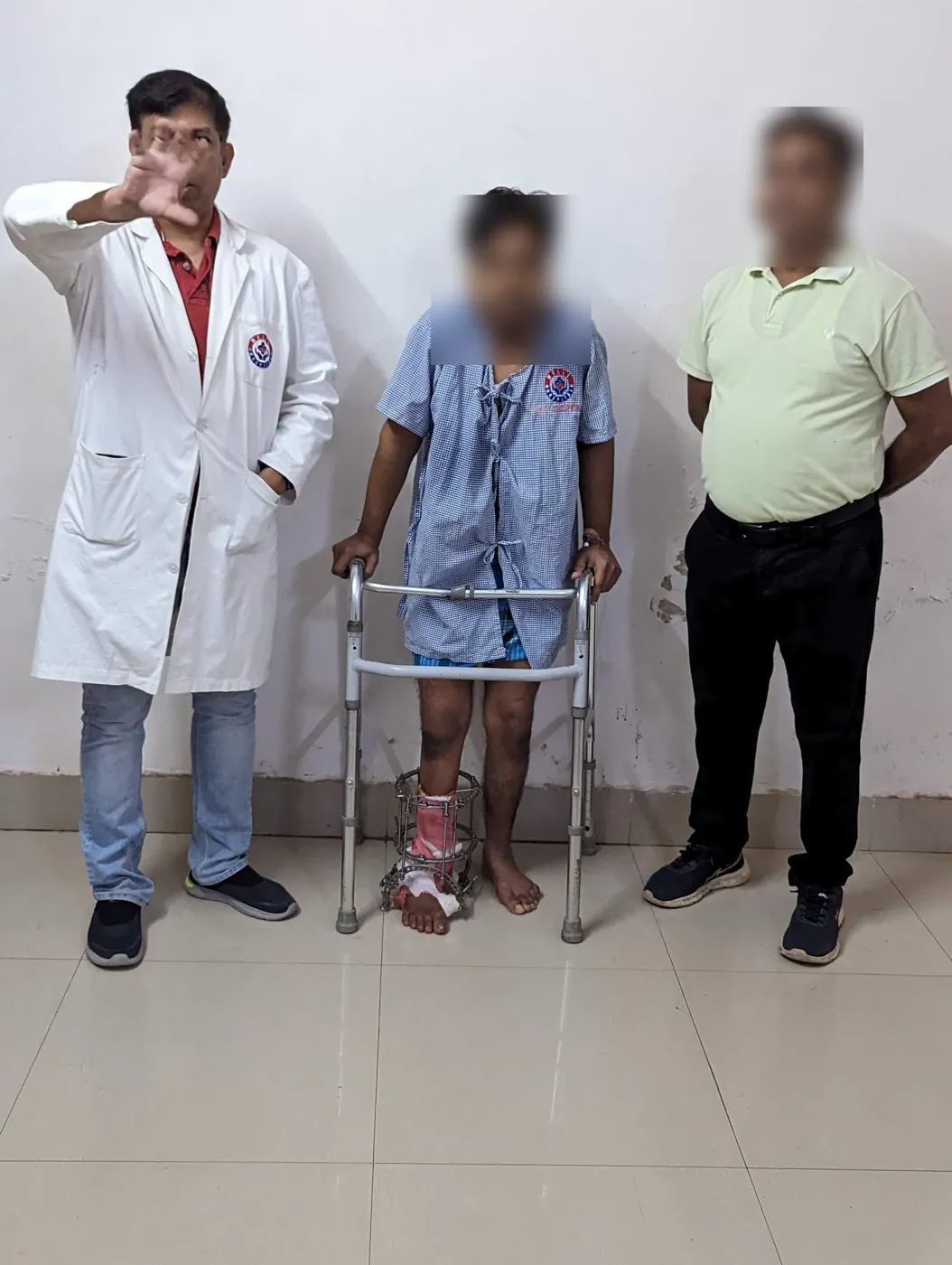
Real patients treated by Dr. Shamsul Hoda at Ortho World, as shown in Chapter 101 of his textbook. Tap any picture to see it larger.
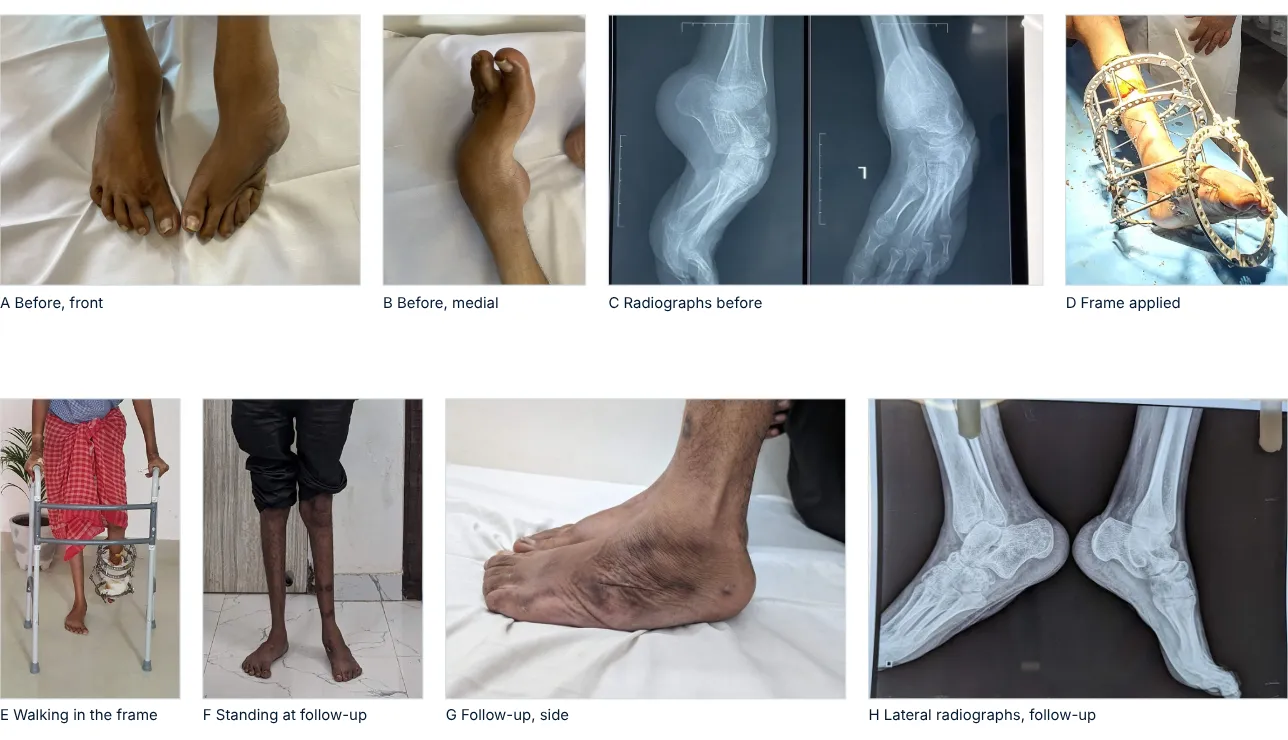
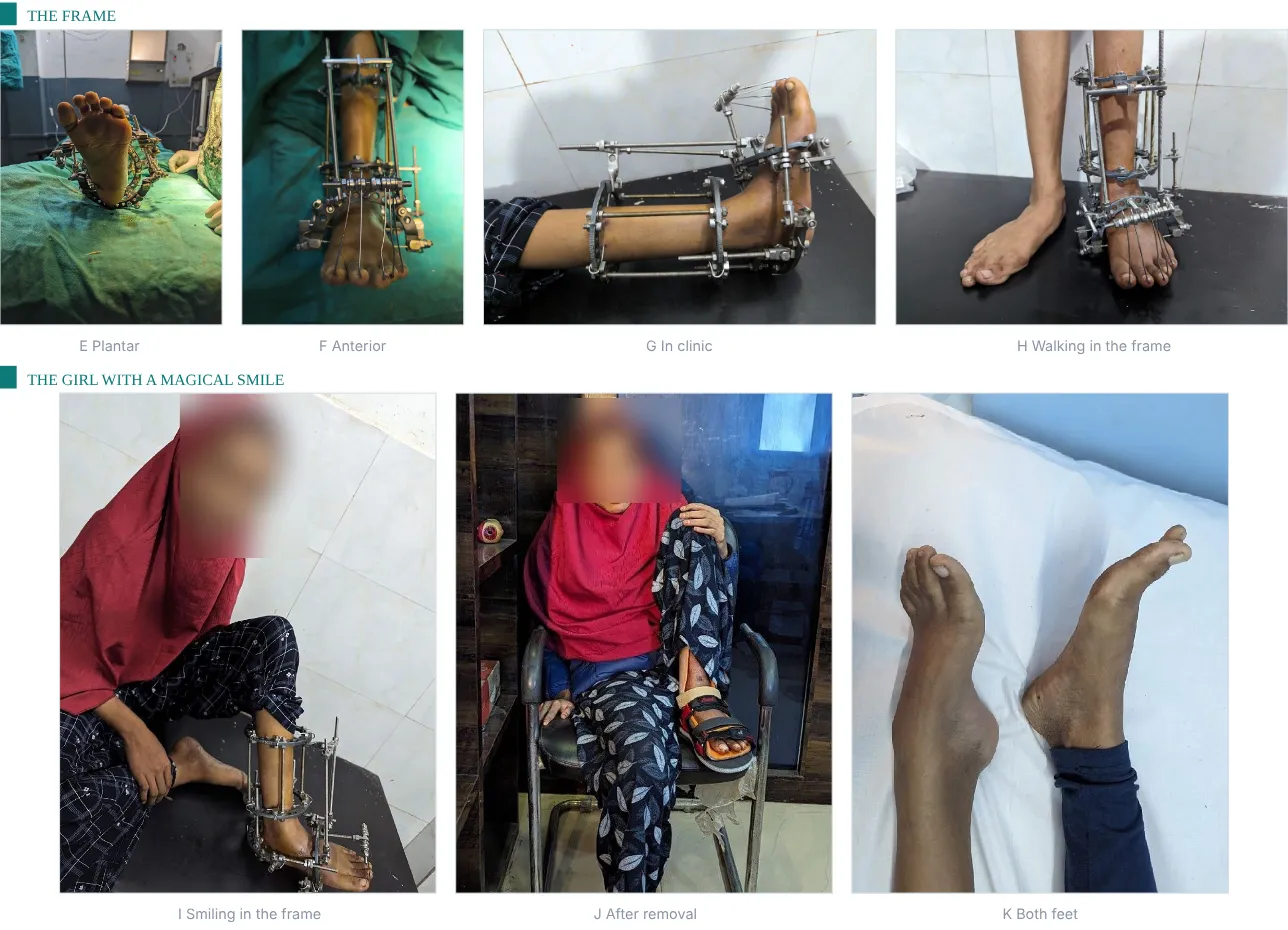
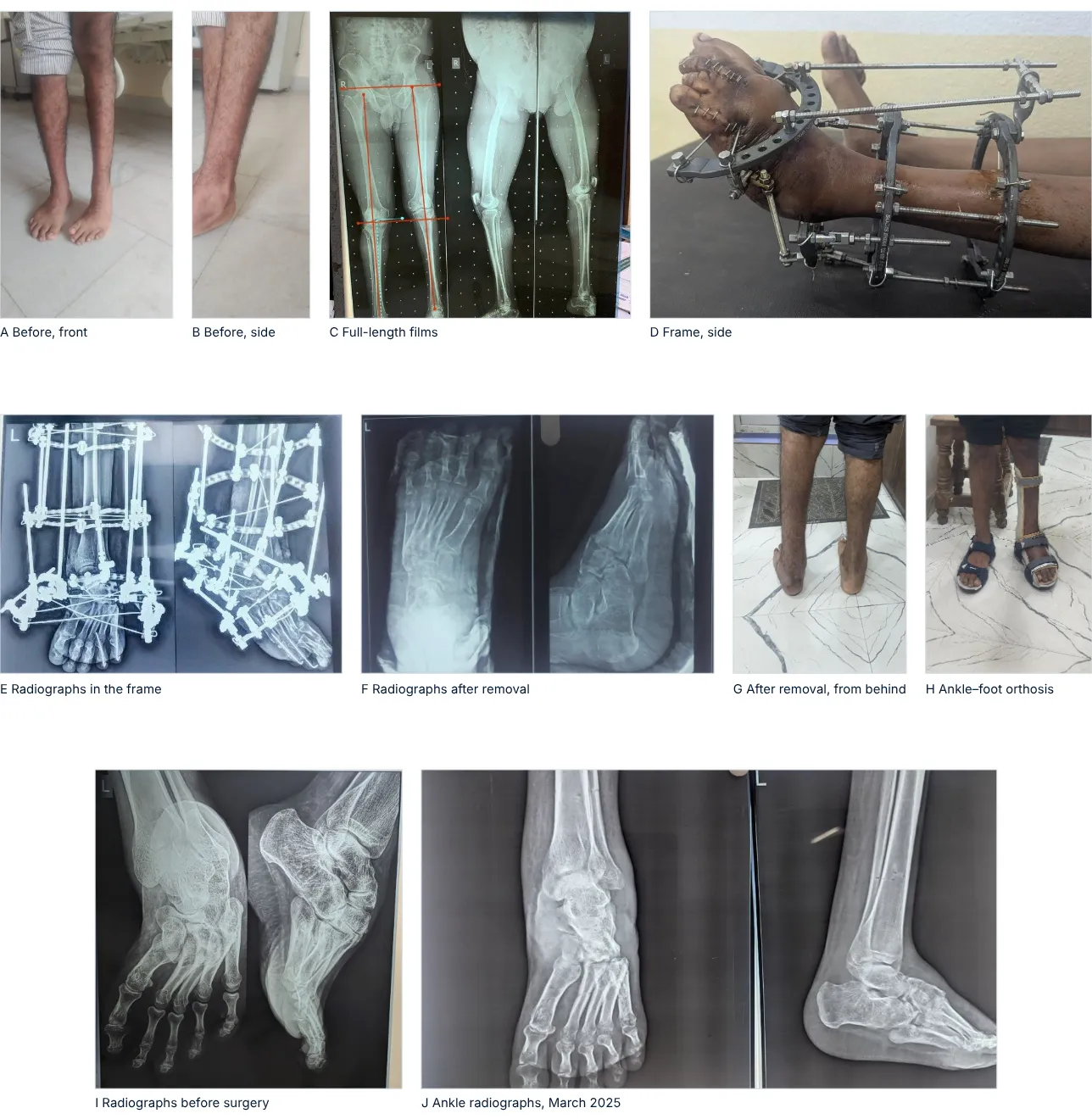
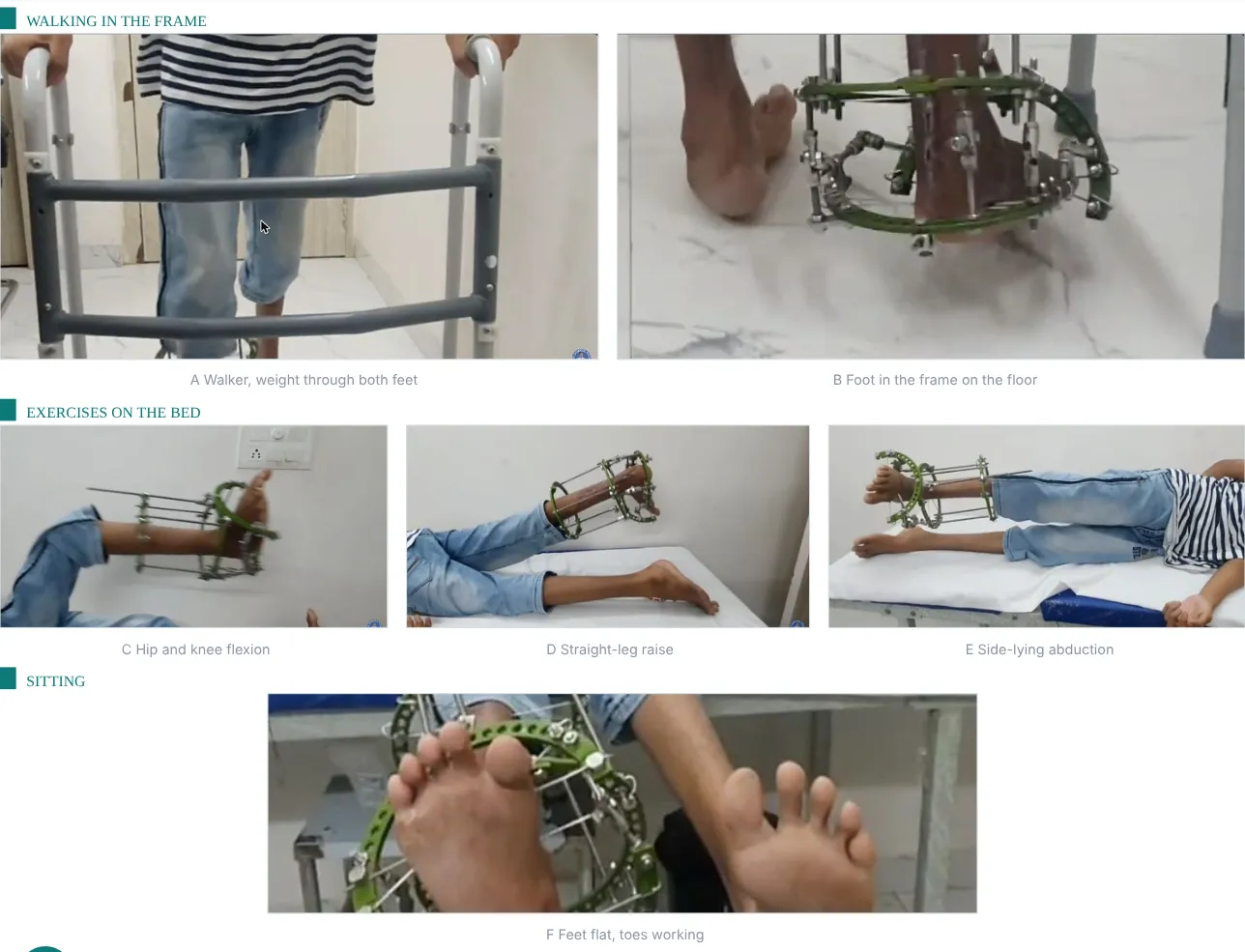
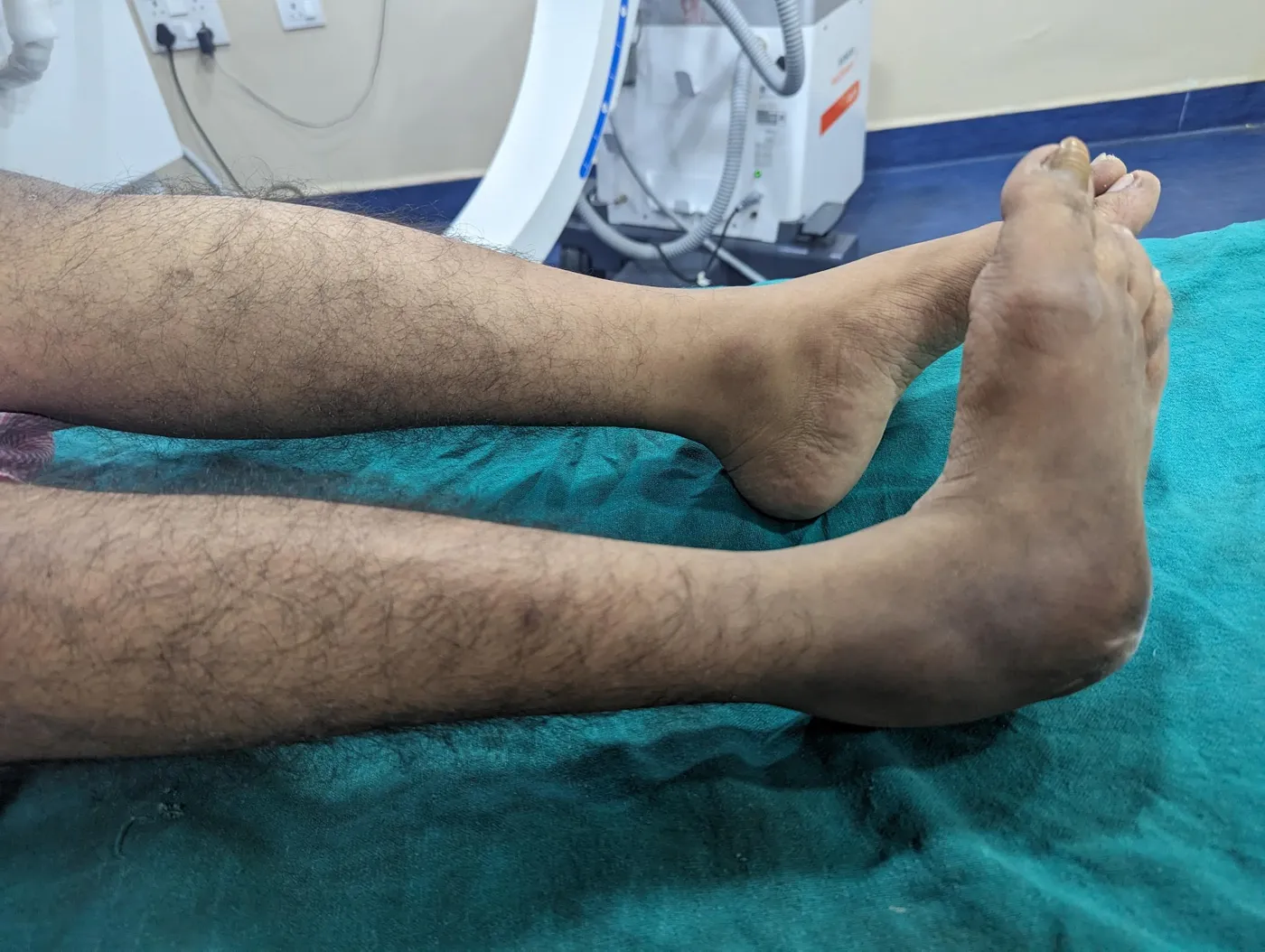
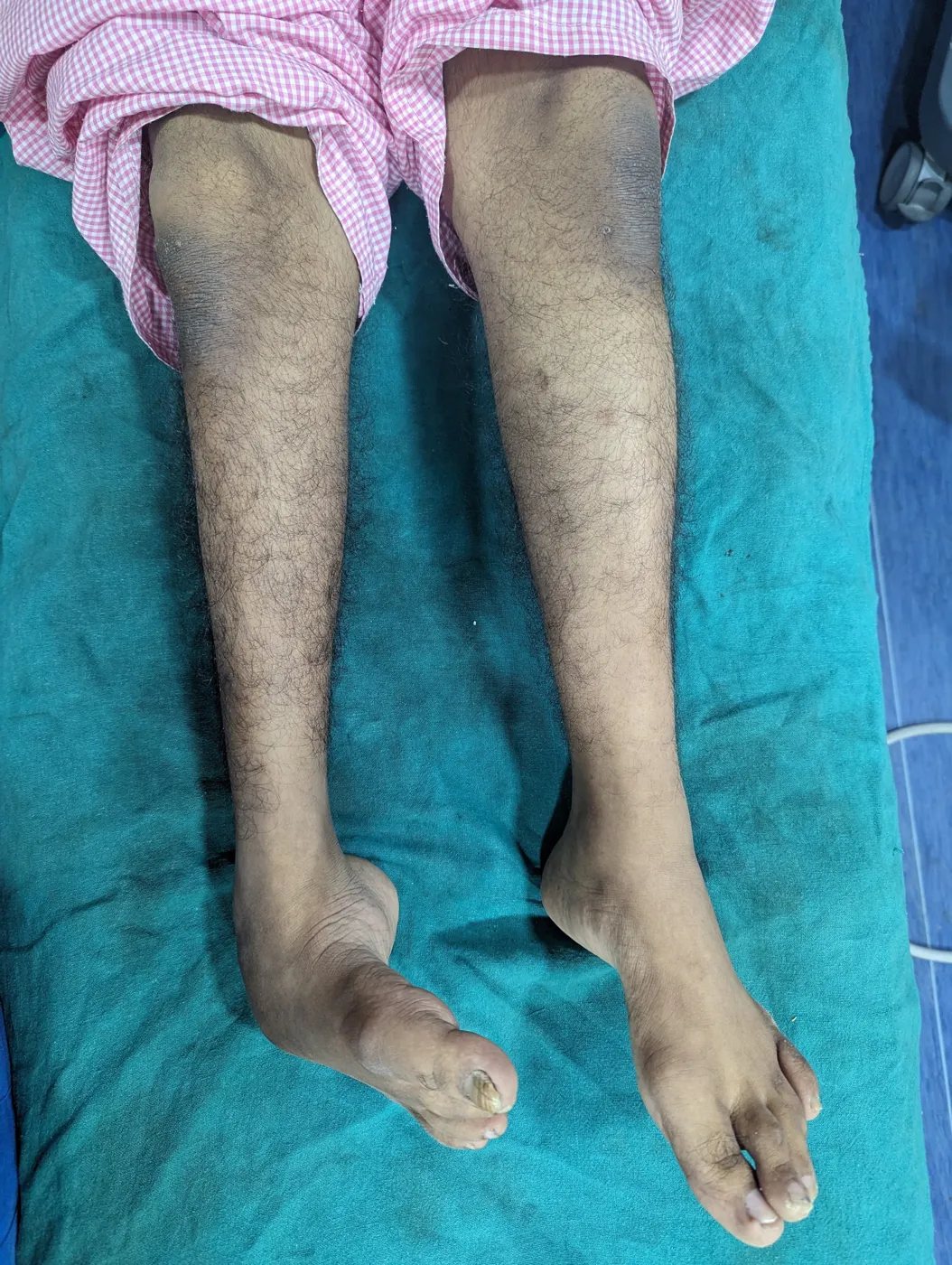
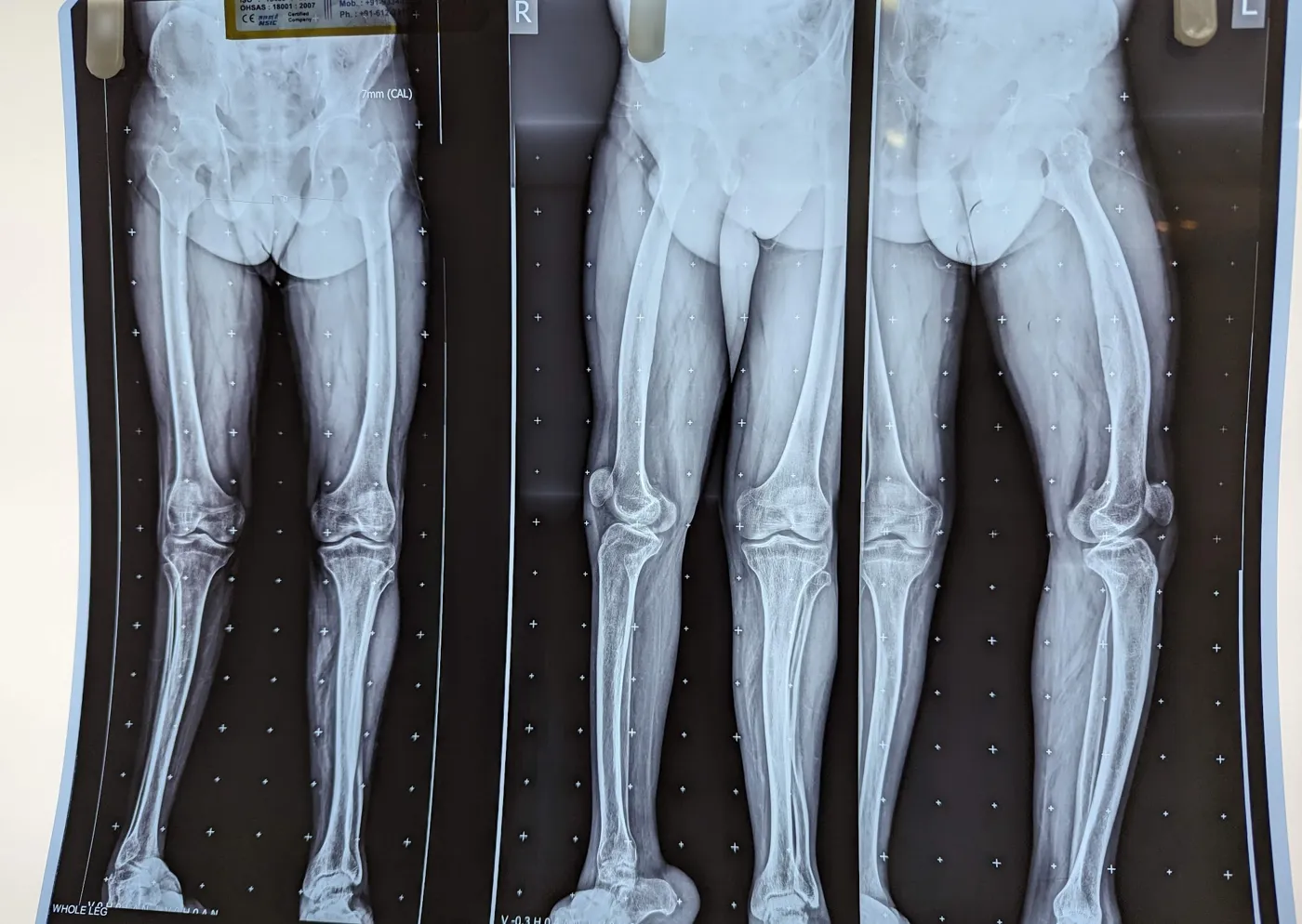
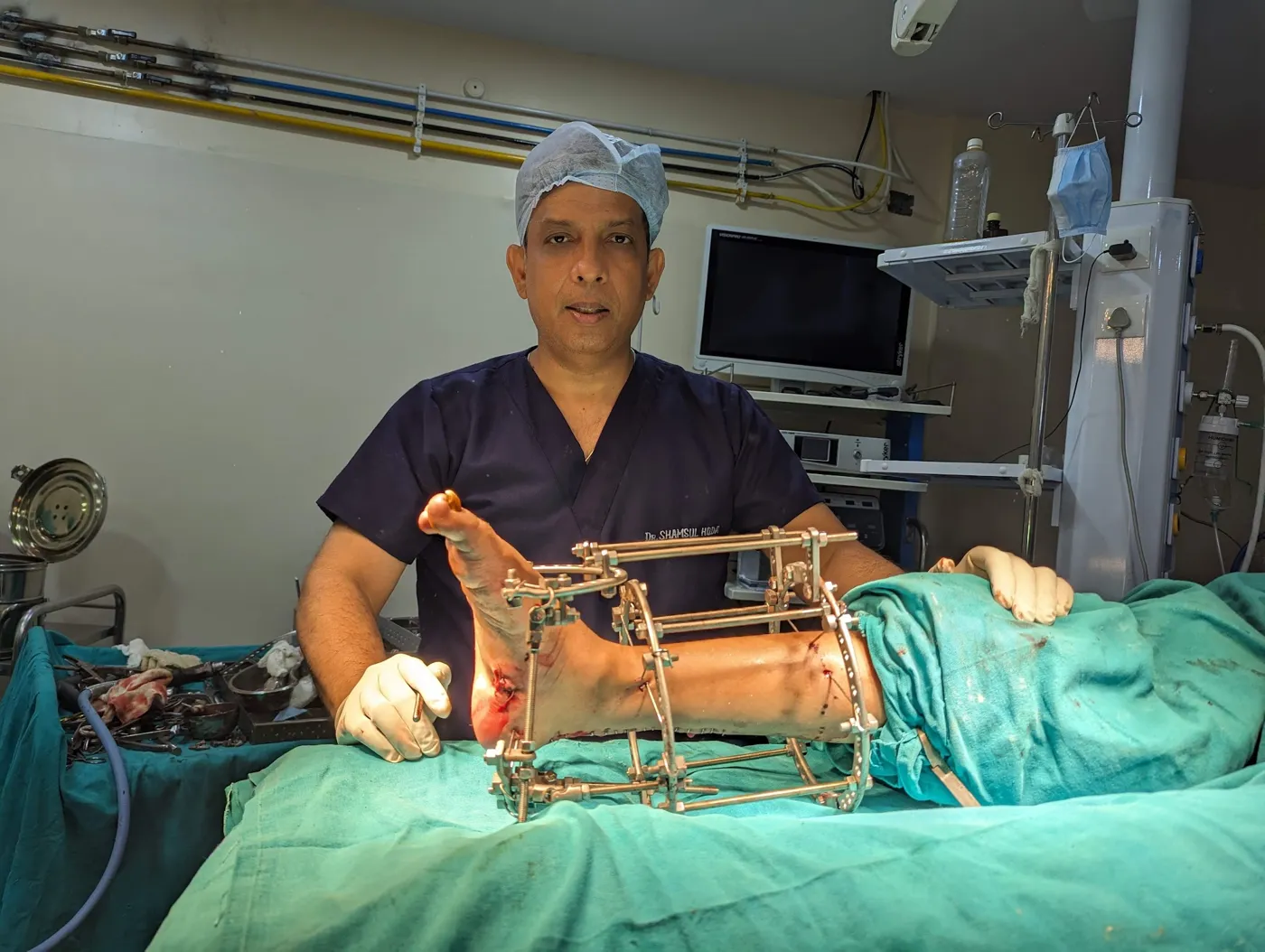
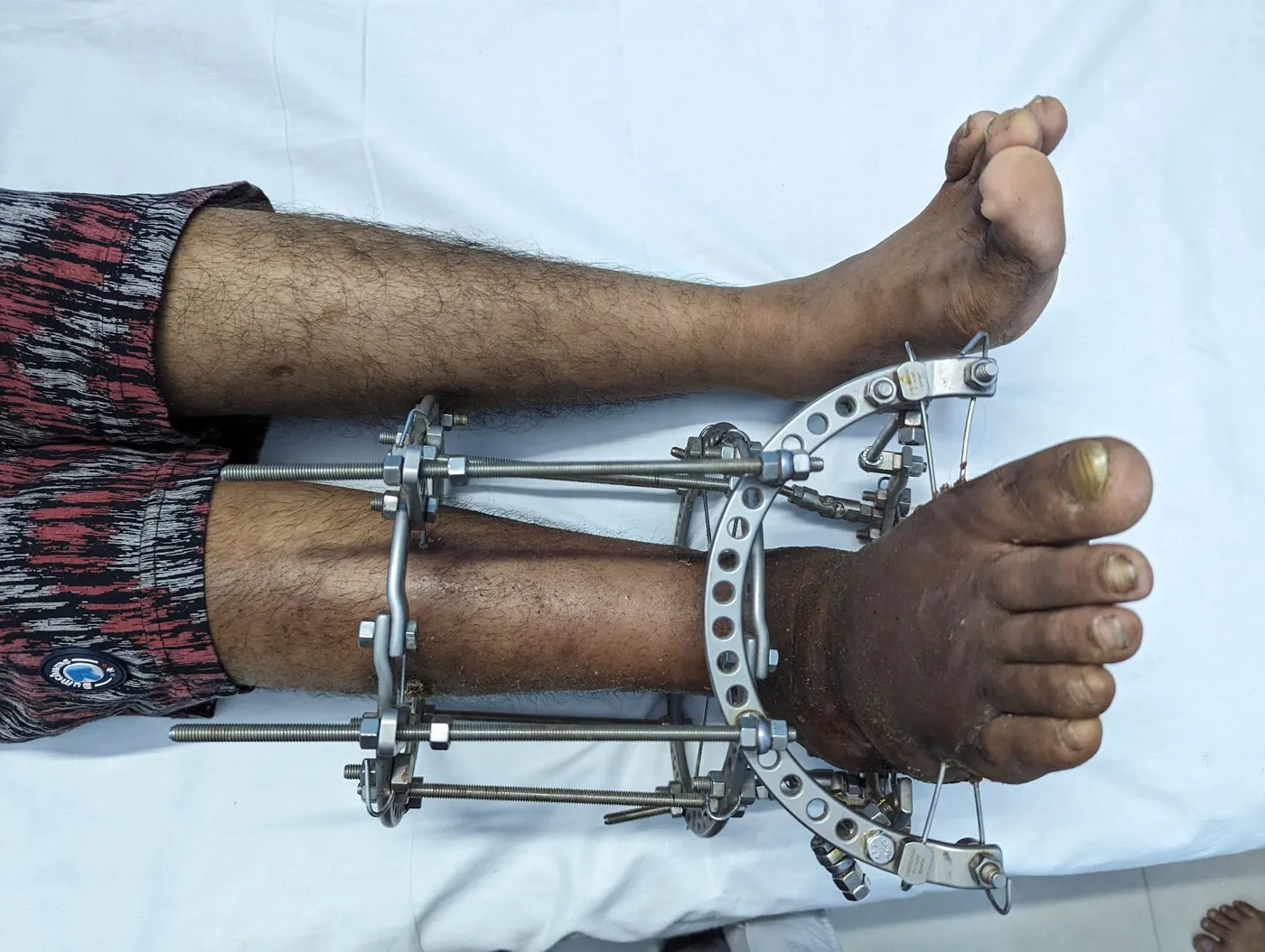
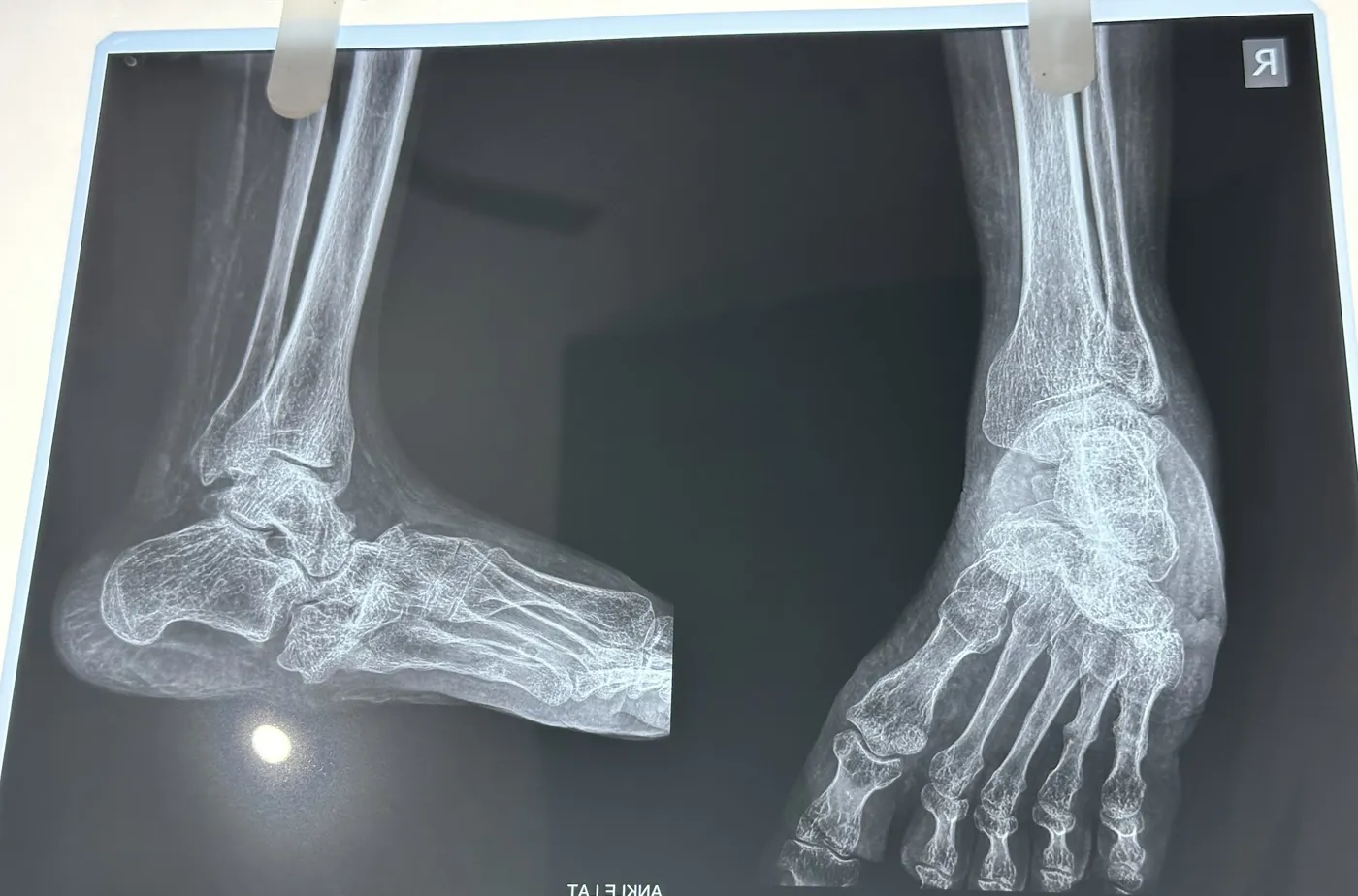
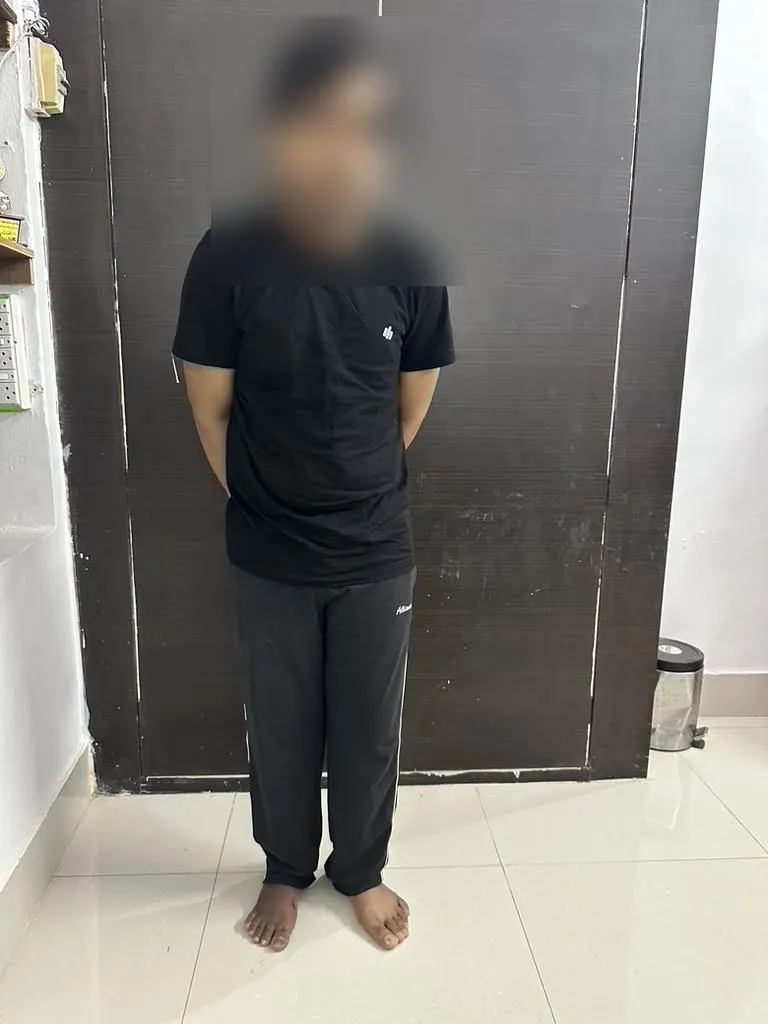
Patient story – a 21-year-old with neglected clubfoot
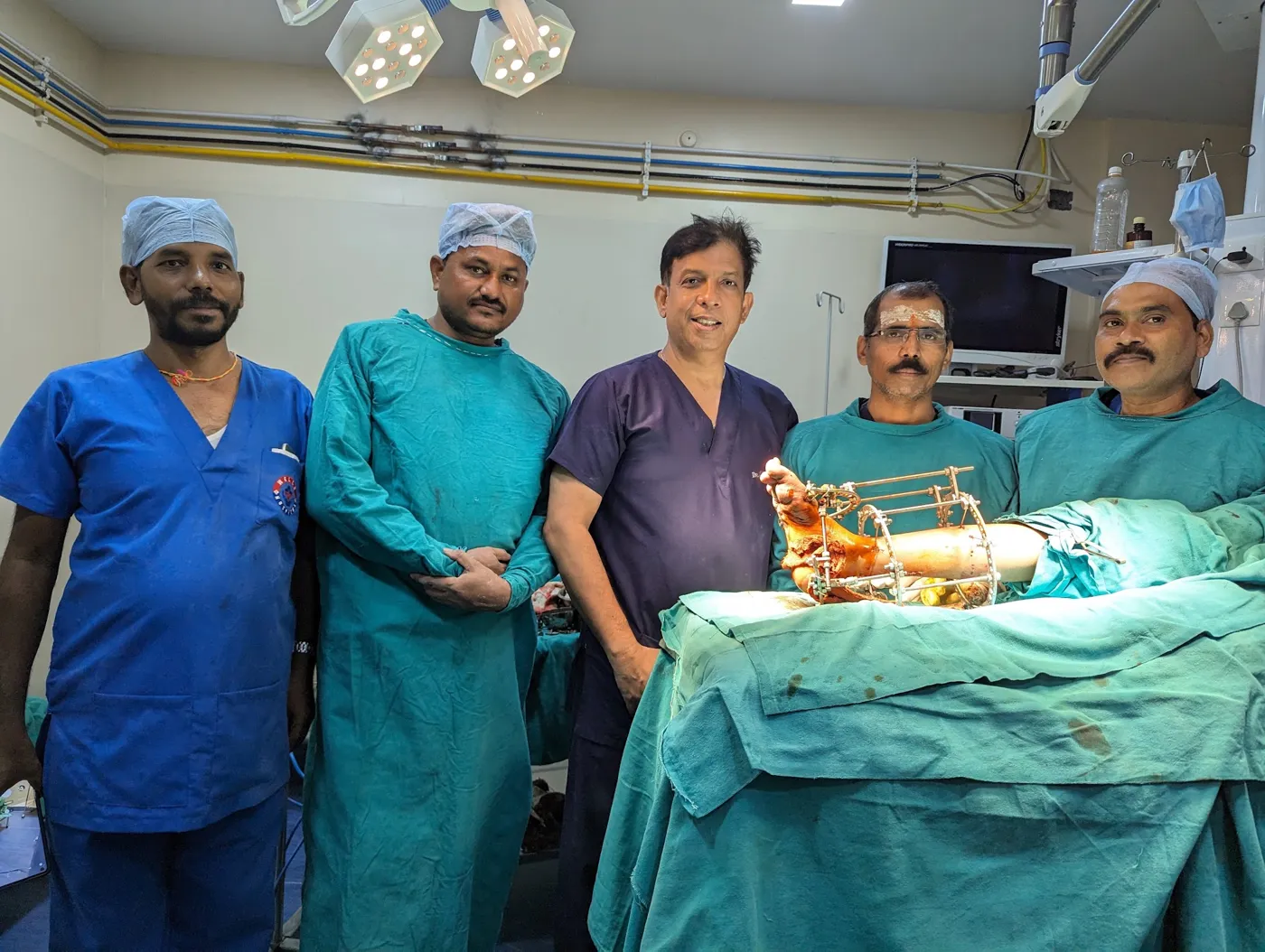
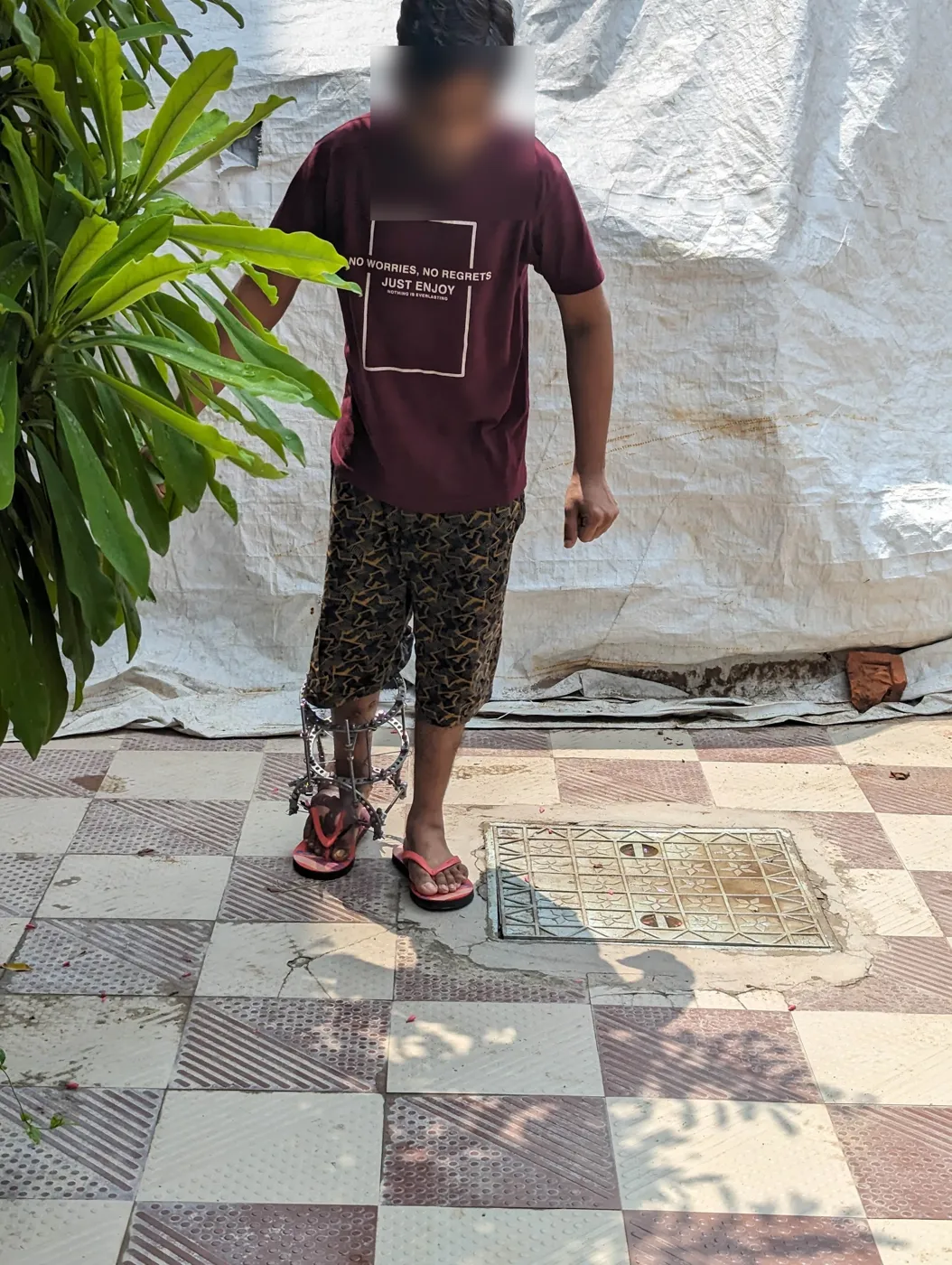
A young man from Patna came to us at 21, walking on the outer edge of a rigid clubfoot. He was treated with Dr. Hoda’s seven-step Ilizarov method in August 2023 – soft-tissue release, the frame on leg, heel and forefoot, and a small mid-foot bone cut – followed by gradual correction while he kept walking. This is the same patient shown as Figure 101.17 in the textbook.
The operation, step by step
Contains surgical images. Filmed during his operation at Ortho World and shared with his consent; no faces or names are shown.
On video
Photographs and X-rays are of Dr. Hoda’s own patients, shared with patient/guardian consent; faces are hidden. Results vary from patient to patient and depend on age, stiffness and follow-up.
Why we correct slightly “past straight”
A foot that has been tight for years tends to tighten again. So, as described in Dr. Hoda’s textbook, the correction is taken a little beyond neutral – the heel slightly outward and the ankle bending up past a right angle – and held there while the tissues settle. Long-term studies show that stopping exactly at straight is a common reason for the deformity coming back.
Who may benefit?
- Neglected clubfoot in older children, teenagers and adults
- Relapsed clubfoot after earlier casting or surgery
- Foot deformity after polio or other neuromuscular conditions
- Post-traumatic foot and ankle deformity
- Complex cavus (high-arched) or flat foot deformity
How adult clubfoot correction is done
- Planning – examination, X-rays of the foot and leg, and a written plan for each part of the deformity.
- Soft-tissue release – a small cut to lengthen the heel cord and release the tight sole (plantar fascia).
- Frame on the leg – two rings on the shin bone form a stable base.
- Frame on the heel – a half-ring holds the heel bone to correct inward tilt and downward point.
- Bone cut in the mid-foot – only if needed – through a small incision, when stiff bone blocks correction.
- Frame on the front of the foot – a half-ring holds the forefoot to correct the high arch and inward turn.
- Hinges and toe wires – hinges set the direction of correction; fine wires keep the toes straight.
- Gradual correction at home – small daily adjustments over several weeks, with regular X-rays.
- Frame removal and bracing – when the foot is flat on the ground and stable.
What to expect
- Time in the frame: usually about 3–4 months, depending on stiffness, age and whether a bone cut was needed.
- After removal: a walking cast for about 6 weeks, then an ankle-foot brace – for at least 6 months, and up to a year or longer (often at night) in a neglected foot.
- Walking: most patients walk with support during treatment.
- Goal: a foot that is flat on the ground, stable, painless and fits into footwear.
Other options we will discuss
Ponseti casting in babies · tendon procedures · gradual Ilizarov correction · bone surgery or fusion in selected adults.
Possible problems we watch for
- Pin-site infection – the most common; managed with care and antibiotics
- Remaining tightness at the ankle – may need longer correction
- Toe clawing – prevented with toe wires and exercises
- Skin tension over the corrected area – watched closely; rarely needs a skin graft
- Collapse of the mid-foot (rocker-bottom) – prevented by correcting the arch before the ankle
Treatment in Patna & Hajipur
Consultations at Ortho World Patna (Kankarbagh) and Ortho World Hajipur. Patients come from across Bihar, the North-East, Nepal and Bangladesh – send standing photos of the feet and X-rays on WhatsApp for an initial assessment.
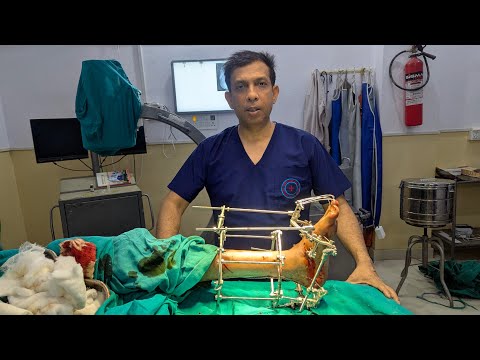
Watch: clubfoot treatment at Ortho World
 ▶
 ▶
 ▶
 ▶
 ▶
 ▶
 ▶
 ▶
 ▶
 ▶
When to call us immediately
Redness, pus or bad smell around a wound or pin · fever · increasing pain, numbness or tingling · a loose or broken wire, pin or ring · cold, pale or blue toes or fingers.
Patna +91 77658 67111 · Hajipur 24-hour emergency +91 70704 61111
Frequently asked questions
Is it too late to treat clubfoot in an adult?
Is the treatment painful?
Can I walk with the frame?
How long until the frame is removed?
Will the deformity come back?
Is treatment covered by insurance or government schemes?
I live far away. Can I get an opinion first?
A note from Dr. Shamsul Hoda
A neglected clubfoot is not the end of the road. With careful planning and patience, most feet can be brought flat to the ground. Our aim is to explain every step honestly and stay with you through recovery.
References
- Ponseti IV. Congenital Clubfoot: Fundamentals of Treatment. Oxford University Press; 1996.
- Grill F, Franke J. The Ilizarov distractor for the correction of relapsed or neglected clubfoot. J Bone Joint Surg Br. 1987;69(4):593–597.
- Paley D. The correction of complex foot deformities using Ilizarov's distraction osteotomies. Clin Orthop Relat Res. 1993;(293):97–111.
Related
Adult & neglected clubfoot (article) · Foot & ankle reconstruction · Seven-step frame (for doctors) · Textbook Chapter 101 – Clubfoot (free) · Deformity correction
Ready to discuss your case?
Book a consultation in Patna or Hajipur, or send your X-rays on WhatsApp for an initial opinion.
